

For youth sports, the most effective approach is a layered routine: broad-spectrum sunscreen with a sun protection factor recommended by health authorities, applied well before play, UPF clothing wherever the sport allows it, shade and smart scheduling, and reapplication breaks built into practice and game routines. Coaches and parents who model the habit consistently see it stick better than any single product ever could.
TL;DR:
- Reapplication of sunscreen every two hours or after heavy sweating or swimming is crucial for maintaining protection during sports.
- UPF clothing and reliable shade sources significantly reduce the need for frequent reapplication and offer consistent sun protection.
- Building sun safety into existing routines, like halftime or water breaks, helps ensure compliance among kids and coaches.
- Parents should focus on easy, repeatable systems such as packing the same gear and using UPF apparel to minimize decision fatigue.
- Special considerations include relying on shade and clothing for infants, checking medication sensitivities, and encouraging kids to take ownership of their sun safety.
Table of Contents
- Youth Sports Sun Safety Checklist for Games and Practices
- The Science Behind Sunscreen, UPF Clothing, Shade, and Timing
- Sport-by-Sport Adjustments and Why Coaches Matter
- A Repeatable Routine and What Goes in the Bag
- Special Situations: Infants, Medications, Skin Tone, and Sensory Needs
- Where This Guidance Comes From
- Hydration and Sun Safety Go Together
- Recognizing Sunburn and Heat Illness Early
- Teaching Kids to Own Their Own Sun Safety
- What Actually Moves the Needle
- Shop UPF Gear Built for Game Day
- Key Official Guidance and Studies
- Sources
- FAQ
Youth Sports Sun Safety Checklist for Games and Practices
The routine only works if it fits inside the same five minutes you already spend packing cleats and water bottles. Build it into that window instead of treating it as a separate task.
- Apply broad-spectrum SPF 30+ sunscreen 15 to 30 minutes before leaving the house, and pack a travel-size bottle for reapplication at the field.
- Dress your athlete in UPF-rated clothing when the sport’s rules and equipment allow it, and keep a hat and sunglasses ready for sideline time.
- Bring a pop-up shade tent or umbrella, extra water, and check the game schedule against peak UV rays, which the CDC notes run strongest roughly from 10 a.m. to 4 p.m.(https://www.cdc.gov/skin-cancer/sun-safety/index.html)
- Treat sunscreen like a piece of required gear. If it lives in the same bag as shin guards and goggles, it gets used.
Pro Tip: Clip a travel sunscreen stick to the outside of the gear bag with a carabiner. Kids are far more likely to reapply something they can reach without digging.
The Science Behind Sunscreen, UPF Clothing, Shade, and Timing
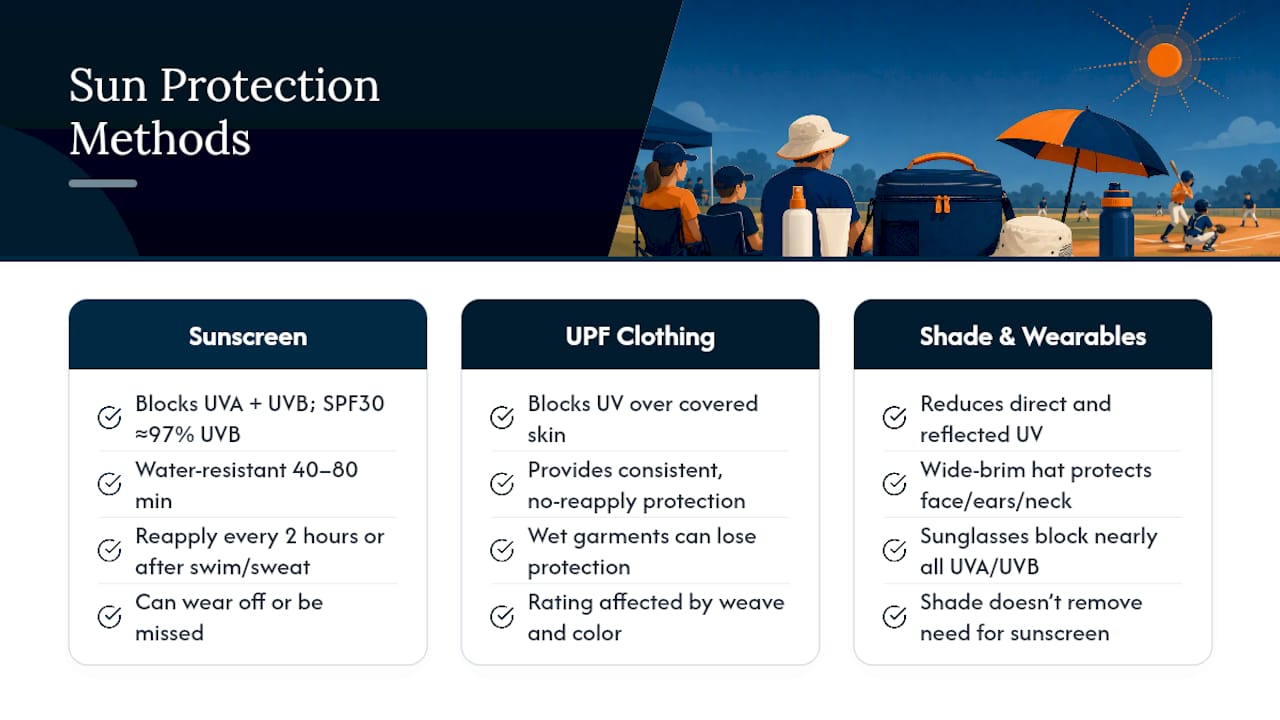
Broad-spectrum sunscreen blocks both UVA and UVB rays, and SPF 30 filters out about 97% of UVB radiation, which is why it’s the baseline the CDC recommends for anyone spending real time outdoors. “Water-resistant” on a label means the formula holds up for a set stretch of swimming or sweating, usually 40 to 80 minutes, not that it lasts the whole game. Reapplication every two hours, or immediately after a swim break or a sweat-soaked half, is not optional maintenance. It’s the actual mechanism that keeps the product working.
UPF clothing solves a problem sunscreen can’t: consistency. A shirt does not wear off, get missed on the back of the neck, or need a 15-minute head start to bind to skin. For long tournaments, back-to-back games, or kids who forget to reapply, UPF garments cut down how often sunscreen needs a touch-up, since covered skin isn’t exposed in the first place. Fabric weave and color both affect the rating, and a soaked garment can lose some of its protective value depending on the material, so it’s worth checking the manufacturer’s activity rating before assuming a wet shirt performs the same as a dry one.
Hats and sunglasses round out the layer. A wide-brimmed hat shades the face, ears, and neck far better than a baseball cap alone, and sunglasses rated for nearly full UVA/UVB blocking protect eyes during outdoor practice the same way sunscreen protects skin.
Shade and timing matter because UV exposure doesn’t require direct sun. Reflection off water, turf, and concrete increases exposure even on overcast days, which is why a shaded bench at a turf field still calls for sunscreen.
Sport-by-Sport Adjustments and Why Coaches Matter
Sunscreen compliance tends to fall apart during competition even when it holds up fine at home. One evaluated youth program found that sunscreen use during sports was consistently lower than sunscreen use at the beach, which says less about parental effort and more about how game-day chaos crowds out routine. Fixing it means building reapplication into the structure of practice and competition, not hoping kids remember on their own.
- Soccer and field sports: Sunglasses usually come off during play but work fine on the bench. Pack a water-resistant lotion, since sweat runs through a full match.
- Baseball and softball: Hats are already part of the uniform. Choose a UPF-rated cap liner or neck flap for dugout stretches between innings.
- Swimming and water sports: Reapply immediately after every swim leg, not just once before the meet, since even water-resistant formulas break down after extended submersion.
Coaches carry more influence here than most parents expect. Programs that trained coaches to model sun-safe behavior and to schedule reapplication breaks saw athletes adopt the habit at noticeably higher rates, a pattern confirmed by the Sun Safe Sports initiative. A coach who pauses practice for a 90-second sunscreen break sends a stronger signal than any reminder note sent home.
Pro Tip: If your child’s team doesn’t have a sun-safety routine, ask the coach to add a halftime reapplication reminder to the existing water break. It costs zero extra time and piggybacks on a habit that already exists.
A Repeatable Routine and What Goes in the Bag
The kit that works is boring on purpose: the same items, in the same bag, every time.
- SPF 30+ lotion for the initial application, plus a spray or stick for quick sideline touch-ups.
- A UPF shirt or rash guard, a wide-brim hat, and UV-blocking sunglasses.
- A pop-up shade, a full water bottle, salty snacks, and a spare hat for the kid who inevitably loses one.
Timing prompts matter as much as the products themselves. Apply sunscreen 15 to 30 minutes before arrival, since the formula needs that lead time to bind properly, and set a mental reminder to reapply every two hours or right after a heavy sweat or swim.
- Sunscreen goes on before shoes go on. Making it the first step of getting dressed removes the “we forgot” excuse entirely.
- Halftime or the between-innings break becomes the built-in reapply signal, the same way water breaks already are.
Special Situations: Infants, Medications, Skin Tone, and Sensory Needs
Not every athlete fits the standard routine, and a few groups need adjusted guidance.
- Infants under 6 months: The FDA and AAP both recommend relying on shade and clothing first, using sunscreen only on small exposed areas like the hands or face when covering up isn’t practical.
- Medications: Certain antibiotics, acne treatments, and other prescriptions increase photosensitivity. Check the label and ask a pharmacist or pediatrician; when unsure, lean toward covering up rather than relying on sunscreen alone.
- Darker skin tones: Melanin offers some natural protection but not immunity. Sun damage accumulates over a lifetime regardless of skin tone, so sunscreen and shade still matter.
- Sensory sensitivities: Kids who resist lotion textures often tolerate UPF garments better, and adjustable-fit hats avoid the tight headband feeling that triggers meltdowns.
Pro Tip: If your child fights every sunscreen texture you’ve tried, stop fighting that battle and put the effort into UPF clothing coverage instead. Less skin exposed means less sunscreen negotiation.
Where This Guidance Comes From
This article draws on public health guidance rather than personal anecdote, and Shari M. Murphy compiled it with an eye toward what parents can realistically execute during an actual game day, not just what looks good on a poster.
- CDC sun safety recommendations on UV timing and SPF 30+ reapplication.
- AAP guidance via HealthyChildren.org on sunscreen basics and infant-specific rules.
- ASDS Sun Safe Sports research on coach role modeling.
- A peer-reviewed program evaluation on youth sunscreen behavior published in PMC.
Real-time UV monitoring, like what the BANZ Protect app provides, helps a parent decide in the moment whether a shaded bench is enough or whether the game genuinely calls for rescheduling.
Some brands build UPF 50+ gear designed for the kind of repeated, sweaty, all-day outdoor exposure youth sports create. Three products worth knowing for the gear bag:
- Hello Sunshine Sunhat with Sequins for sideline coverage that kids actually want to wear.
- Childrens Sun Hats with UPF 50+ Protection with Pocket for storing a lip balm or hair tie without losing brim coverage.
- Short Sleeve Rash Guard and Board Shorts Set, Coolgardie Blue, Size 4 for swim practice or beach-adjacent tournaments.
Hydration and Sun Safety Go Together
Sun exposure and dehydration compound each other, and treating them as separate concerns is where a lot of routines fall short. Heat raises core body temperature, sweat increases fluid loss, and a sunburned body works harder to cool itself, which increases fluid needs even further. A kid who is dehydrated also sweats less efficiently, which means their body can’t regulate temperature as well, raising the risk of heat exhaustion during exactly the kind of long practice or tournament where sun exposure is highest.
Water breaks and sunscreen breaks should happen on the same schedule, not on separate ones. If your team already pauses for water every 20 to 30 minutes during hot-weather practice, that’s the natural moment to also check sunscreen and hat placement. Trying to run two separate reminder systems is how both end up forgotten.
Pack more water than seems necessary. Electrolyte drinks help during longer tournaments, especially in humid conditions, but plain water covers most single-game needs. Watch for early dehydration signs: dry mouth, fatigue that seems out of proportion to the activity, or a headache appearing mid-game. Catching those early prevents the more serious heat illness that shows up later in this guide.
Recognizing Sunburn and Heat Illness Early
Sunburn shows up as pink or red skin, warmth to the touch, and tenderness, usually within a few hours of exposure, though it can take up to 24 hours to fully develop. If it happens, get the child out of the sun immediately, cool the skin with a damp cloth, and offer water. Blistering, fever, or chills alongside a burn warrant a call to a pediatrician rather than a wait-and-see approach.
Heat-related illness is the more urgent concern during sports, because it escalates fast. Heat exhaustion looks like heavy sweating, weakness, nausea, dizziness, and a headache. The response is immediate: move the child to shade, remove excess clothing, apply cool water or ice packs, and have them sip water slowly. Symptoms should improve within 15 to 20 minutes; if they don’t, that’s a signal to escalate care.
Heat stroke is a medical emergency and looks different: hot, dry, or flushed skin, confusion, a rapid pulse, and in some cases a loss of consciousness. If any of these appear, call 911 immediately, move the child to shade, and begin cooling while waiting for help. Do not wait to see if it passes.
Coaches and parents on the sideline are the first line of defense here, which is exactly why the earlier point about coach-led water and sunscreen breaks matters so much. Catching heat exhaustion at minute one, instead of minute twenty, is often the difference between a bench rest and an ambulance.
Teaching Kids to Own Their Own Sun Safety
Sun safety sticks better when a child understands the “why,” not just the rule. Explaining that sunburn is skin damage, not just discomfort, tends to land better with kids than a generic “put this on” instruction.
Give young athletes small jobs instead of passive compliance. Let a 7 or 8 year old carry their own sunscreen stick and reapply it themselves at halftime, even if a parent double-checks the coverage afterward. Ownership builds the habit faster than repetition alone.
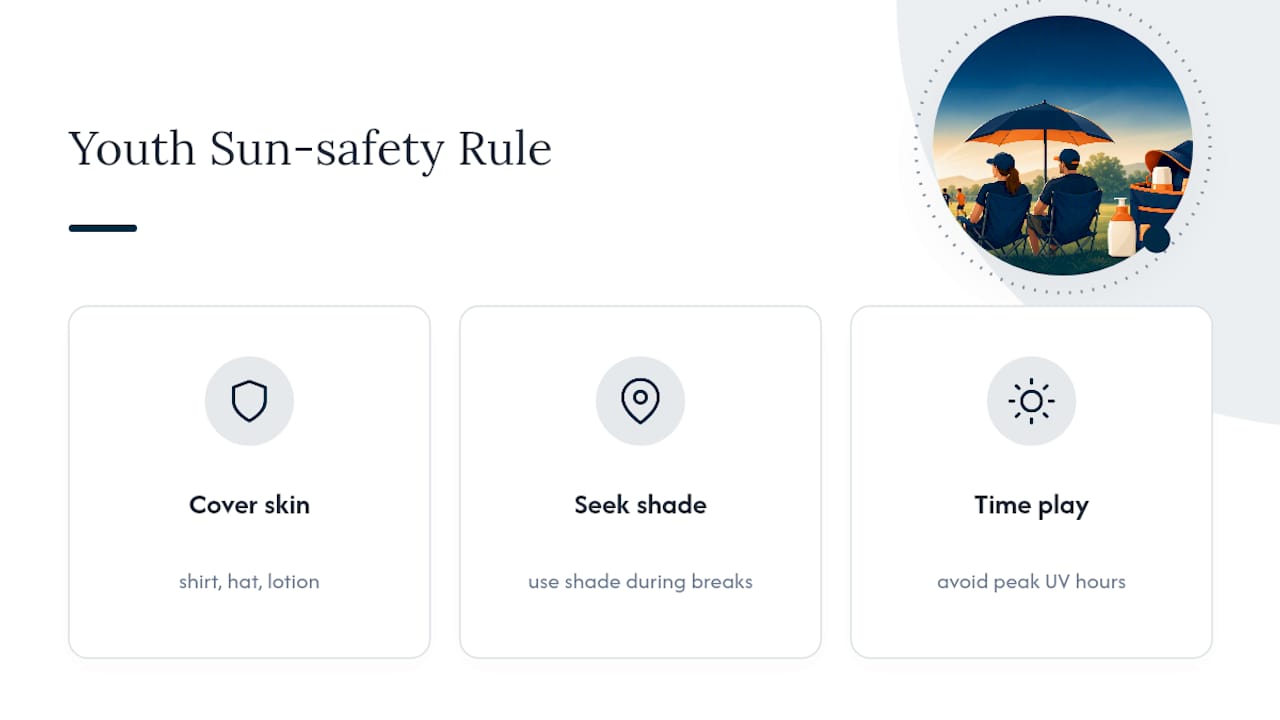
Use language kids can act on: “shirt, hat, lotion” before “cleats, shin guards, water bottle” turns sun protection into a checklist item instead of a chore. Some programs use the framing of covering skin, seeking shade, and timing outdoor play around peak UV hours as a simple three-part rule kids can repeat back.
Letting kids pick their own UPF hat or rash guard pattern, within the options available, increases the odds they’ll actually wear it without a fight. A wide-brim sun hat they chose themselves gets far less pushback than one handed to them at the door. By age 9 or 10, most kids can manage their own reapplication with a quick parent reminder rather than direct supervision, which is a meaningful step toward the habit lasting into their teenage years without a parent standing over them.
What Actually Moves the Needle
Most sun safety advice for young athletes reads like a poster in a pediatrician’s waiting room: accurate, well-meaning, and largely ignored by 10 a.m. on game day. The gap isn’t information. Parents already know sunscreen matters. The gap is friction, and the programs that actually move behavior, like the coach-training interventions ASDS has documented, succeed because they remove decision points rather than adding new rules.
That’s the piece conventional advice underweights. Telling a parent to “reapply every two hours” assumes someone is tracking two hours during a tournament with four games and one working watch. The fix isn’t more education. It’s fewer decisions: UPF clothing that doesn’t need timing at all, a bag that’s already packed the same way every Saturday, a coach who builds sunscreen into the existing water break instead of asking for a new one.
Prioritize the layer that removes a decision before the layer that requires remembering one. Clothing beats lotion on convenience even when lotion wins on flexibility. Get the boring, repeatable system right first. The rest follows.
— Shari M. Murphy
Shop UPF Gear Built for Game Day
BANZ makes the layered routine easier to actually follow, not just easier to describe. Instead of relying on memory to reapply sunscreen every two hours through a full tournament, a UPF 50+ hat or rash guard from BANZ covers that skin the entire time, no timer required.
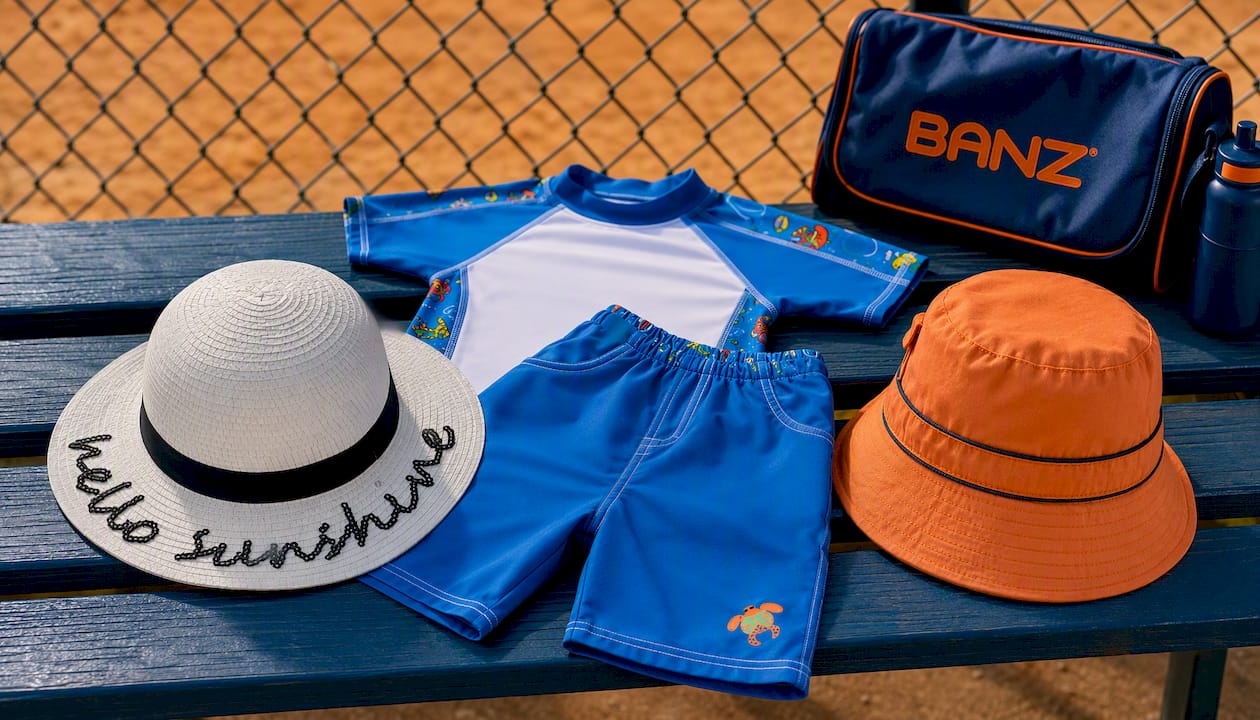
The Childrens Sun Hats with UPF 50+ Protection with Pocket work well for kids who need a place to stash a lip balm or hair tie without sacrificing brim coverage, and the wide brim shades ears and neck the way a baseball cap can’t. For water sports and beach-adjacent games, the Short Sleeve Rash Guard and Board Shorts Set in Coolgardie Blue gives full torso coverage that survives repeated swimming without losing its rating. Check the full BANZ collection for sizing charts and care instructions before you buy, since a snug fit on a growing kid matters as much as the UPF number on the tag. Pull up the size guide, match it to your child’s current measurements, and add the hat or rash guard that fits your team’s sport before the next practice.
Key Official Guidance and Studies
- Sun safety — CDC
- Sun Safety: Information for Parents — HealthyChildren.org (AAP)
- Sun Safe Sports — ASDS
- Should you put sunscreen on infants? — FDA
- Impact of a Youth Sun Safety Educational Program — PMC
This article is general information, not a substitute for advice from a qualified doctor. Consult a qualified healthcare professional about your own circumstances before acting on anything here.
Sources
- Sun safety — CDC
- Sun Safe Sports — ASDS
- Impact of a Youth Sun Safety Educational Program — PMC
- Should you put sunscreen on infants? — FDA
FAQ
What Are the 5 S’s of Sun Safety for Kids?
Common versions include slip on protective clothing, slop on broad-spectrum SPF 30+ sunscreen, slap on a wide-brim hat, seek shade, and slide on UV-blocking sunglasses. The exact wording varies by program, but the core idea matches the layered approach this guide recommends: cover skin, protect eyes, and manage timing together.
What Are Some Sun-Safe Activities for Kids?
Early morning or evening practices, water-based games under a shade tent, and sports played on grass rather than reflective turf all reduce UV exposure. Any outdoor activity becomes safer with UPF clothing, a hat, and sunscreen applied ahead of time.
What Are the SunSmart Rules?
SunSmart-style guidance generally centers on slip, slop, slap, seek, and slide, the same five actions covered above: clothing, sunscreen, a hat, shade, and sunglasses. Applying all five together, rather than relying on sunscreen alone, is what the CDC’s layered guidance also supports.
Should a 10-Year-Old Wear Sunscreen?
Yes. Children over 6 months should wear broad-spectrum SPF 30+ sunscreen during outdoor sports, reapplied every two hours or immediately after swimming or heavy sweating, per AAP guidance. By age 10, most kids can apply it themselves with a quick parent check for missed spots.
Does BANZ Sell UPF Clothing for Youth Sports?
Yes. BANZ offers UPF 50+ sun hats starting at $19, UV swimwear starting at $15, and sunglasses starting at $17, all designed for repeated outdoor wear. Current prices and sizing are listed on the BANZ site.