

Water-resistant sun protection is not the same as regular sunscreen, and understanding why waterproof sun protection differs from regular formulas is a practical safety issue for every caregiver. The FDA banned the term “waterproof” from sunscreen labels in 2011, replacing it with “water resistant” and requiring tested time limits of 40 or 80 minutes. The difference between sunscreen types comes down to formulation: water-resistant products use film-forming polymers that grip UV filters to skin through water exposure, while regular sunscreens lack that durable layer entirely. For parents managing a child’s outdoor safety, this distinction changes which product you reach for and how often you reapply.
Why waterproof sun protection differs from regular: the FDA rules
No sunscreen sold in the United States can legally call itself “waterproof.” The FDA prohibited both “waterproof” and “sunblock” as marketing terms because they implied permanent or complete protection. Neither claim is true, and both led caregivers to skip reapplication.
The only permitted claim is “water resistant,” and it must state a specific duration: either 40 or 80 minutes. Those numbers come directly from standardized lab testing. A 40-minute rating means the product maintained its SPF after two separate 20-minute water immersion cycles. An 80-minute rating means it passed four cycles. These are tested maximums under controlled conditions, not real-world guarantees.
The practical implication for caregivers is significant. A product rated for 80 minutes does not protect a child for 80 minutes of continuous swimming in a lake with sunscreen applied unevenly. It means the formula held up under specific lab conditions. Real-world performance depends on application thickness, skin type, and activity level.
Pro Tip: Check the label before buying. If a product says “water resistant (80 minutes),” that is the highest rating available. Anything claiming to be “waterproof” is either mislabeled or sold outside the US.
| Claim | Meaning | Testing standard |
|---|---|---|
| Water resistant (40 min) | SPF maintained after 2 immersion cycles | FDA standardized lab protocol |
| Water resistant (80 min) | SPF maintained after 4 immersion cycles | FDA standardized lab protocol |
| “Waterproof” | Banned in the US since 2011 | Not a valid claim |
| “Sunblock” | Banned in the US since 2011 | Not a valid claim |
How does water-resistant sunscreen work differently than regular sunscreen?
The core difference is the polymer system inside the formula. Water-resistant sunscreens use film-forming polymers that create a hydrophobic matrix on the skin’s surface. This matrix traps UV filters in place and resists being washed away by water or sweat. Regular sunscreens do not contain this durable polymer layer, so water and perspiration dissolve and remove them quickly.

Two main polymer types appear in water-resistant formulas. Silicone-based polymers, such as trimethylsiloxysilicate, form a hydrophobic film that swells minimally under water, keeping UV filters evenly distributed across the skin. Acrylic-based polymers work similarly but tend to feel slightly lighter. Both types outperform the simple emulsifiers found in standard daily sunscreens.
Regular sunscreens are formulated for cosmetic comfort. They blend easily, feel light on skin, and absorb quickly. Those properties come at a cost: the formula degrades fast when a child sweats or gets wet. Within minutes of water contact, a significant portion of the UV filter coverage is gone.
Water-resistant formulas make a trade-off. They are thicker and more occlusive than regular sunscreens, which some children find uncomfortable. That heavier feel is the direct result of the polymer film doing its job. For pool days, beach trips, or any activity involving sweat, that trade-off is worth it.
- Film-forming polymers create a continuous, adhesive layer that bonds UV filters to skin.
- Silicone-based versions (e.g., trimethylsiloxysilicate) resist water swelling and maintain even UV filter distribution.
- Acrylic-based versions offer a lighter feel while still providing a durable protective film.
- Regular sunscreens use standard emulsifiers that break down on contact with water or sweat.
- The result: water-resistant formulas retain SPF under immersion; regular formulas do not.
Pro Tip: For children with sensitive skin, look for water-resistant mineral formulas using zinc oxide or titanium dioxide. These sit on top of the skin rather than absorbing into it, and the polymer film still holds them in place through water exposure.
What factors break down sunscreen protection during outdoor activities?
Water resistance ratings are achieved under controlled lab conditions. Real-world factors like friction, sweat composition, and repeated drying accelerate sunscreen breakdown far faster than lab tests suggest. Caregivers who understand these factors apply sunscreen more effectively.
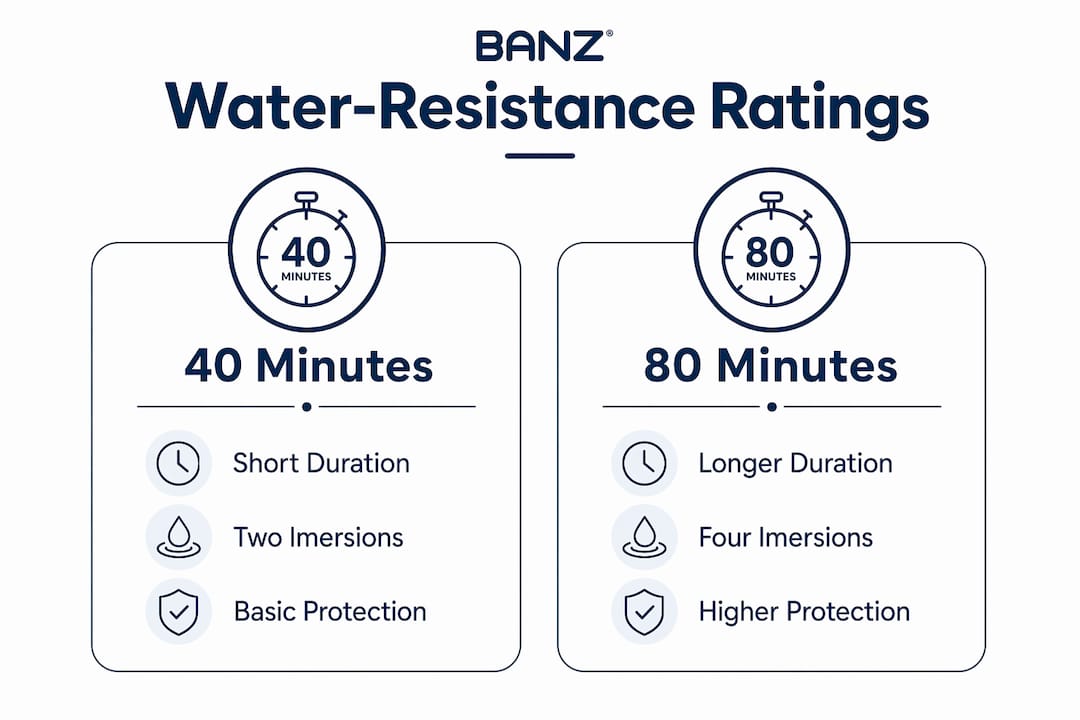
Sweat is a particular problem. It contains salts and oils that interact with sunscreen film and degrade it faster than plain water. A child running on a hot beach loses sunscreen protection through sweating even before entering the water. The combination of sweat followed by swimming followed by towel drying is the most damaging sequence a sunscreen film can face.
Towel drying is the most underestimated cause of sunscreen loss. Towel drying physically removes the sunscreen film through abrasion, regardless of the product’s water resistance rating. A child who swims for 30 minutes and then gets toweled off has lost most of their protection, even if the product was rated for 80 minutes.
Assuming a water-resistant sunscreen provides indefinite protection is the single most common mistake caregivers make. The FDA’s “waterproof” ban exists precisely because that assumption led to longer unprotected sun exposure and higher sunburn rates, especially in children with delicate skin.
The numbered sequence below reflects the order in which protection degrades during a typical beach outing:
- Initial application: Full SPF coverage if applied correctly, 15–30 minutes before sun exposure.
- First sweat cycle: Salt and oil in sweat begin breaking down the polymer film within 20–30 minutes of activity.
- Water entry: Immersion accelerates film degradation; 40-minute-rated products begin losing SPF protection after two 20-minute cycles.
- Towel drying: Physical abrasion removes remaining film. Protection is significantly reduced at this point.
- Reapplication window: Reapply immediately after drying. Do not wait for the next scheduled interval.
How should caregivers choose and apply sun protection for children?
Matching the sunscreen type to the activity is the most direct way to improve a child’s protection. High water exposure activities, including swimming, water parks, and beach play, require a water-resistant sunscreen rated for 80 minutes. Low-activity, low-sweat scenarios, such as a shaded playground visit or a short walk, can use a regular SPF 30+ formula without the heavier polymer film.
Application volume and timing matter as much as product choice. Apply roughly one ounce of sunscreen (about a full shot glass) 15–30 minutes before going outside. Most caregivers apply far less than this, which reduces effective SPF significantly. Thin application is one of the most common reasons sunscreen underperforms.
Reapplication is not optional. Reapply every two hours during outdoor activity, and immediately after swimming, sweating heavily, or towel drying. The 80-minute water resistance rating is a ceiling, not a target. Treat it as the outer limit under ideal conditions, not a timer to set and forget.
Sunscreen alone is not a complete sun safety plan. The sun safety checklist for caregivers from BANZ recommends combining sunscreen with physical barriers for full protection. Physical barriers block UV before it reaches skin entirely, which no sunscreen can guarantee.
- 80-minute water-resistant formula: required for swimming, water parks, and high-sweat sports.
- Regular SPF 30+ formula: appropriate for low-sweat, low-water-contact activities in shade.
- Application amount: one ounce per full body, applied 15–30 minutes before exposure.
- Reapplication timing: every two hours, or immediately after towel drying or heavy sweating.
- Physical barriers: UPF 50+ clothing, wide-brim hats, and UV-blocking sunglasses add a layer of protection sunscreen cannot replicate.
| Activity type | Recommended sunscreen | Reapplication trigger |
|---|---|---|
| Swimming or water park | Water resistant (80 min), SPF 50+ | Immediately after towel drying |
| Beach play with sweating | Water resistant (80 min), SPF 50+ | Every 80 min or after towel drying |
| Active outdoor sports | Water resistant (40 min), SPF 30+ | Every 2 hours or after heavy sweat |
| Shaded playground, short walk | Regular SPF 30+ | Every 2 hours |
| Daily school or errands | Regular SPF 30+ | Once in morning, reapply if prolonged |
Pair sunscreen with UPF-rated sun hats for children. A UPF 50+ hat blocks over 98% of UV rays on the face and neck, areas where sunscreen is often applied too thinly or missed entirely. Physical barriers and sunscreen work together, not as substitutes for each other.
Key Takeaways
Water-resistant sunscreens use film-forming polymers to maintain SPF during water exposure, while regular sunscreens lack this durable layer and degrade quickly with sweat or swimming.
| Point | Details |
|---|---|
| “Waterproof” is banned | The FDA prohibits this term; only “water resistant (40 or 80 min)” is legally valid in the US. |
| Polymer film is the key difference | Water-resistant formulas use silicone or acrylic polymers to hold UV filters in place through water contact. |
| Towel drying removes protection | Physical abrasion strips the sunscreen film regardless of water resistance rating; reapply immediately after drying. |
| Match product to activity | Use 80-minute water-resistant formulas for swimming; regular SPF 30+ works for low-sweat, low-water scenarios. |
| One ounce, 15–30 minutes ahead | Apply the correct volume before sun exposure and reapply every two hours or after water contact. |
The label change that still confuses caregivers
I have watched parents at the pool apply sunscreen once at 10 AM and not touch the bottle again until 3 PM. When I ask why, the answer is almost always the same: “It says water resistant.” That label creates a false sense of security that the old “waterproof” label created even more aggressively. The FDA fixed the wording in 2011, but the behavior has not fully caught up.
The science is clear. No polymer film survives four hours of swimming, sweating, and towel drying intact. The 80-minute rating is a starting point, not a finish line. What I find most useful to tell caregivers is this: treat every towel dry as a reset. The moment a child gets dried off, their sunscreen protection is largely gone. That single mental model changes behavior more reliably than any label.
The other thing I push back on is the idea that water-resistant sunscreen is only for beach days. Children sweat heavily during any outdoor play in summer heat. A child on a playground in july can lose meaningful sunscreen coverage through sweat alone within 45 minutes. A water-resistant formula is the better default for any active outdoor time, not just water activities.
Combining sunscreen with outdoor sun safety gear is the approach I consistently recommend. UPF clothing and hats do not wash off, do not need reapplication, and do not depend on a child holding still long enough for you to apply them correctly. Use both. The sunscreen covers what the clothing cannot reach; the clothing covers what the sunscreen might miss.
— Shari M. Murphy
BANZ sun protection for active kids
Sunscreen is one layer of protection. BANZ builds the rest. BANZ® UPF 50+ sun hats and UV-blocking sunglasses for children cover the face, neck, and eyes, the areas most exposed and most often under-protected by sunscreen alone.
BANZ® products are trusted by over 2 million families across six continents, and the free BANZ Protect app gives caregivers real-time UV monitoring so you know exactly when conditions require extra protection. For a full picture of UV eye protection for children and how physical barriers work alongside sunscreen, the BANZ resource library covers it in practical detail. Pair the right sunscreen with the right gear and your child’s outdoor time stays protected from the first application to the last.
FAQ
What does “water resistant” mean on a sunscreen label?
Water resistant means the product maintained its SPF after either two or four 20-minute water immersion cycles, corresponding to 40-minute or 80-minute ratings. The FDA requires the specific duration to appear on the label.
Is waterproof sunscreen available in the US?
No. The FDA banned “waterproof” sunscreen labels in 2011 because the term misled consumers into believing protection was indefinite. All US products use “water resistant” with a tested time limit.
How often should you reapply water-resistant sunscreen on children?
Reapply every two hours during outdoor activity, and immediately after towel drying or heavy sweating. The 80-minute rating is a tested maximum, not a timer. Towel drying resets the clock regardless of how recently you applied.
Do children need water-resistant sunscreen for playground play?
Yes, for any active outdoor play in warm weather. Children sweat significantly during physical activity, and sweat degrades regular sunscreen faster than water does. A water-resistant formula holds up better during high-sweat activity even without swimming.
What is the benefit of combining sunscreen with UPF clothing?
UPF 50+ clothing blocks over 98% of UV rays on covered skin and does not require reapplication. Combining it with sunscreen covers areas clothing cannot reach, such as the face and hands, giving children comprehensive UV coverage during extended outdoor activities.