

For active carry and leak-proof hiking, choose a water bottle. For relaxed sipping, ice access, and all-day temperature control at a desk or campsite, choose a tumbler. Insulation quality and lid type decide most of the difference, and the checklist below sorts out the rest for your family’s routine.
TL;DR:
- Insulation quality, especially double-wall vacuum construction, is critical for keeping drinks cold for up to 24 hours, but only if the lid remains properly sealed.
- Lid type impacts leak resistance and usability; screw caps are best for security and pressure changes, while flip straw lids suit quick access but may leak more easily.
- Capacity should match daily routines, with 12 to 20 ounces for short errands, 20 to 32 ounces for all-day hydration, and larger sizes for outdoor activities.
- Materials like stainless steel resist flavor transfer and handle heat well, making them ideal for long-term hot or cold drinks, while plastic is lighter and more drop-resistant.
- Matching the vessel to its use case—stationary sipping vs active carrying—is more important than size or capacity alone.
Table of Contents
- Tumbler vs Water Bottle: What Actually Separates Them
- Materials and Insulation: How Construction Shapes Performance
- Lid Types, Leak Resistance, and Fit for Your Routine
- Matching Capacity to How You Actually Use It
- Cleaning, Safety, and Keeping Drinkware Fresh
- How to Choose: A Quick Checklist Before You Buy
- Picnic Wine Insulated Stainless Tumbler 12oz: A Real-World Tumbler Example
- Choose the Vessel That Matches Your Actual Day
- Grab the Tumbler Built for Your Downtime
- Sources
Tumbler vs Water Bottle: What Actually Separates Them
The core distinction comes down to design purpose. A tumbler is built for sipping while stationary, and a water bottle is built for secure carry while you move. HYDAWAY frames this as a design-logic split: bottles prioritize secure closures and quick access on the go, while tumblers prioritize comfortable drinking and easier ice access when you’re parked at a desk, in a car, or at a picnic table.
A tumbler typically has a wide mouth, a flat bottom for stability, and a lid that’s either a sip opening, a straw, or sometimes no lid at all. Insulated versions use double-wall stainless steel to hold cold drinks cold for hours without sweating on your counter. The wide opening makes room for ice cubes and makes cleaning easier, but that same opening isn’t built to survive a sideways tumble in a diaper bag.
A water bottle usually has a narrower mouth and a cap engineered to seal tight under pressure or movement. Shapes tend to run tall and slim so they fit standard bottle cages, cupholders, and backpack side pockets. Sport spouts, screw caps, and flip-top lids all trade a bit of drinking ease for a lot more leak security.
Hybrids blur these lines on purpose:
- Tall tumblers with handles add a carry loop so you can bring a wide-mouth cup along for the ride.
- Handled water bottles borrow tumbler comfort while keeping a secure cap.
- Straw-lid tumblers split the difference between sipping ease and spill control for a wiggly toddler in a car seat.
Knowing which category a product actually belongs to (regardless of what the label calls it) tells you what trade-offs you’re accepting before you buy.
Materials and Insulation: How Construction Shapes Performance
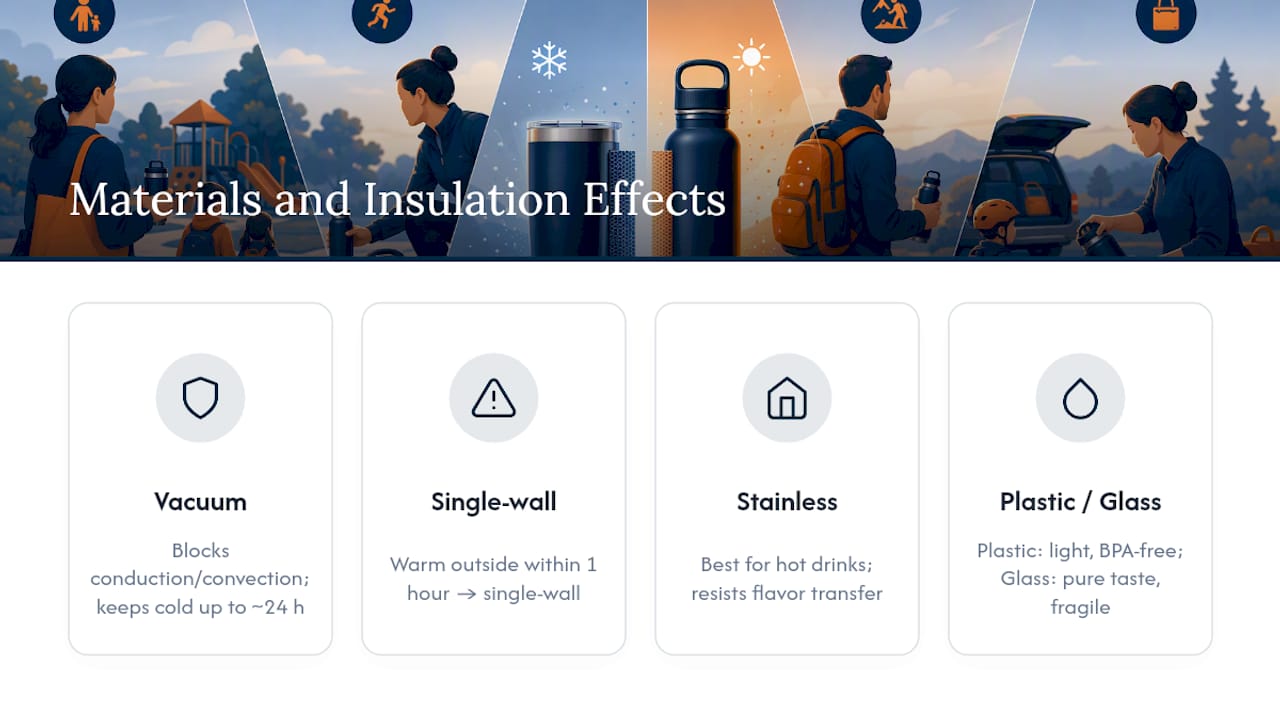
Vacuum insulation is the single biggest factor separating a drink that’s still cold at 3 p.m. from one that’s lukewarm by 10 a.m. Double-wall vacuum construction removes nearly all the air between the inner and outer walls, and that near-vacuum blocks conduction and convection almost entirely, which is far more effective at holding temperature than a single layer of any material.
Pro Tip: If a bottle or tumbler feels warm on the outside within an hour of holding ice water, it’s single-wall, not vacuum-insulated, no matter what the marketing copy says.
OutdoorGearLab’s testing found that quality insulated bottles can keep drinks cold for up to roughly 24 hours, though that number drops fast if the lid gets opened often or the mouth is wide. A wide-mouth tumbler you sip from constantly won’t hold that ceiling the way a rarely opened sport bottle will.
Material choice matters just as much as construction. REI recommends stainless steel over plastic for hot beverages, since steel resists flavor transfer and handles heat without warping. Plastic (usually Tritan or HDPE) weighs less and survives drops better, and REI notes that most plastic bottles sold today are BPA-free, which matters if you’re filling one with anything warm for a toddler. Glass wins on taste purity, since it never absorbs odors, but it’s a poor match for an active household with kids underfoot.
Insulation earns its keep most when a drink needs to survive hours away from a fridge or kettle: iced coffee on a commute, hot cocoa on a winter walk, or water sitting in a hot car during errands. For a glass of water you’ll finish in twenty minutes at your desk, insulation is nice but not the deciding factor. And yes, an insulated vessel that “sweats” on the outside usually means the vacuum seal has failed or the wall is single-layer, not double.
Lid Types, Leak Resistance, and Fit for Your Routine
Lid choice decides whether a bottle or tumbler earns a permanent spot in your bag or ends up abandoned in a cabinet. A cap that’s annoying to open one-handed while driving, or that never fully seals, gets replaced by whatever’s easiest to grab, even if that’s a flimsier option.
Here’s how the common lid styles behave in real use:
- Screw caps seal the tightest and hold up best to pressure changes, which is why they’re the standard choice for air travel.
- Sport spouts open with a flip and a bite, convenient for one-handed drinking on a bike or during a workout, but they can weep if squeezed in a bag.
- Chug lids offer a wide-open pour for fast drinking, with minimal leak protection if the bottle tips.
- Flip-straw lids combine straw convenience with a cap you can snap shut, a solid middle ground for cars and strollers.
- Sip lids on tumblers control splashing without fully sealing, fine for a desk, risky for a diaper bag.
OutdoorGearLab specifically recommends checking cap style before flying, since cabin pressure changes can force leaks past weaker seals, screw caps handle that stress best.
Before buying, run three quick fit checks: Does it slide into your car’s cupholder without wedging? Does it clear a bike bottle cage or stroller cupholder? Does it fit the side pocket of the diaper bag or backpack you actually use every day? A bottle that aces every performance test but doesn’t fit your cupholder becomes a bottle you stop carrying.
Matching Capacity to How You Actually Use It
Capacity should follow your schedule, not the biggest size on the shelf. Oversized vessels add weight and bulk that most daily routines don’t need.
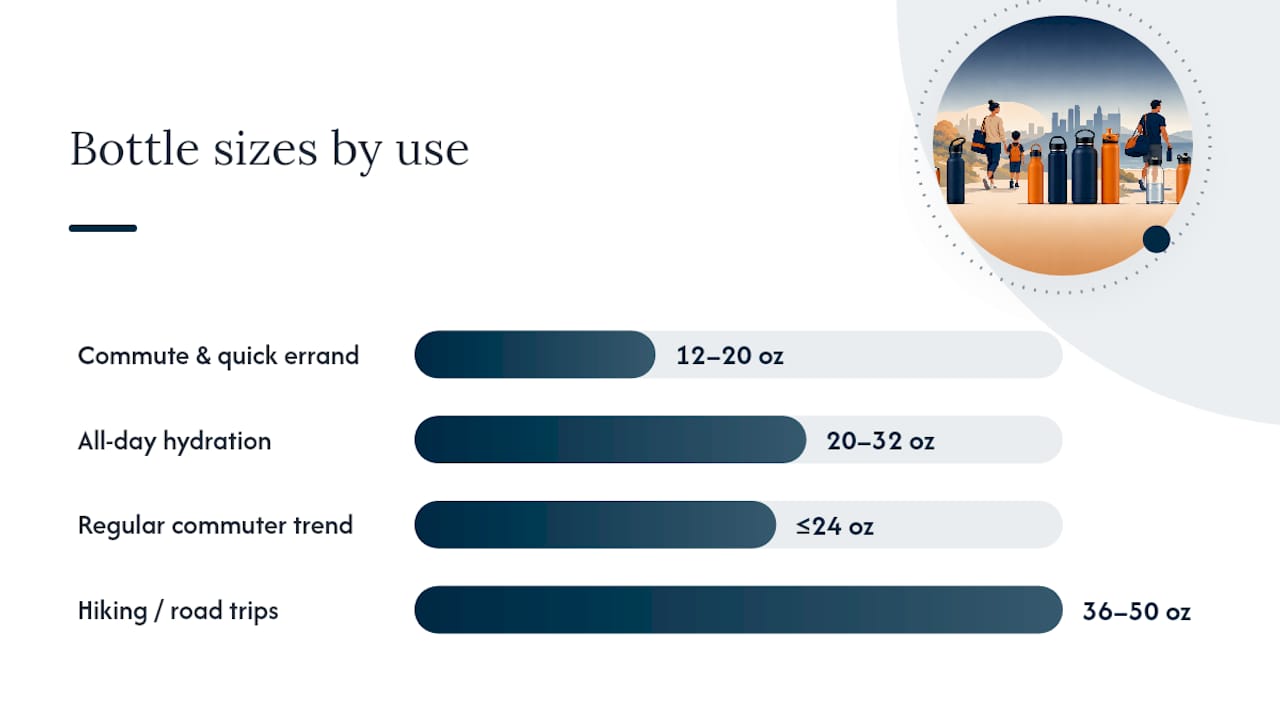
- 12 to 20 ounces covers a commute coffee, a school pickup line, or a quick errand where refill access is easy.
- 20 to 32 ounces is the sweet spot for all-day hydration at work, home, or running kid activities without constant refills. Category guides note a trend toward smaller capacities, generally 24 ounces or less, for regular commuters who value ease of carry over maximum volume.
- 36 to 50 ounces suits hiking, road trips, or a full day outdoors where refilling isn’t convenient.
Some routines call for two vessels rather than one oversized option. Carry a rugged bottle for the trail or car ride, then switch to a tumbler once you’ve reached the campsite, the desk, or the picnic table, where sipping comfort matters more than spill security.
HYDAWAY highlights collapsible bottles as a separate solution for travel: they fold flat when empty, which matters if you’re packing a diaper bag or carry-on where every inch counts. A rigid 32-ounce bottle that’s empty for half your flight is just dead weight; a collapsible one isn’t.
Cleaning, Safety, and Keeping Drinkware Fresh
Cleaning routine depends heavily on lid design, not just material. Straws and narrow lid channels trap milk, juice, and formula residue fast, and that buildup is where mold and off odors start.
- Wide-mouth tumblers with simple sip lids are usually dishwasher-safe and easy to hand wash with a bottle brush.
- Straw lids and sport spouts need a dedicated straw brush run through the tube weekly, even if the bottle looks clean.
- Insulated stainless vessels should skip the dishwasher’s heat cycle over time, since repeated heat can degrade the vacuum seal.
- Plastic bottles marked dishwasher-safe are fine on the top rack, away from direct heating elements.
For anything holding hot drinks or hot liquids destined for a child, stick with BPA-free plastics or stainless steel, and check that any straw or gasket parts are BPA-free as well, since those small pieces are often overlooked. A practical cleaning walkthrough for stainless tumblers covers the exact steps for keeping seals and threads free of buildup without damaging the insulation.
How to Choose: A Quick Checklist Before You Buy
Run through these priorities in order, and the right vessel becomes obvious fast:
- Primary use: commuting, hiking, desk work, or family outings
- Lid type: screw cap for security, sport spout for one-handed sipping, straw for kids, sip lid for comfort
- Insulation need: all-day hot or cold demands vacuum insulation; short-term use doesn’t
- Material: stainless steel for durability and hot drinks, plastic for light weight, glass for pure taste
- Capacity: matched to refill access, not maximum volume
- Fit: cupholder, bottle cage, or bag pocket, checked before purchase
- Cleaning ease: fewer parts mean less mold risk
- Warranty: a real warranty signals confidence in the seal and finish
Three quick scenarios show how the priorities shift:
| Scenario | Top priority | Second priority |
|---|---|---|
| Daily commuter | Cupholder fit | Leak-proof lid |
| Active outdoors (hiking, sports) | Insulation duration | Bottle cage/pack fit |
| Desk or road trip | Sipping comfort | Capacity for the whole day |
Watch for red flags before checking out: vague “premium material” claims with no named metal or plastic type, lids with more than three or four parts that are hard to disassemble for cleaning, and leak-proof claims with no mention of cap style or testing. If a listing can’t tell you whether it’s stainless steel or which plastic resin it uses, assume the worst and move on.
Picnic Wine Insulated Stainless Tumbler 12oz: A Real-World Tumbler Example
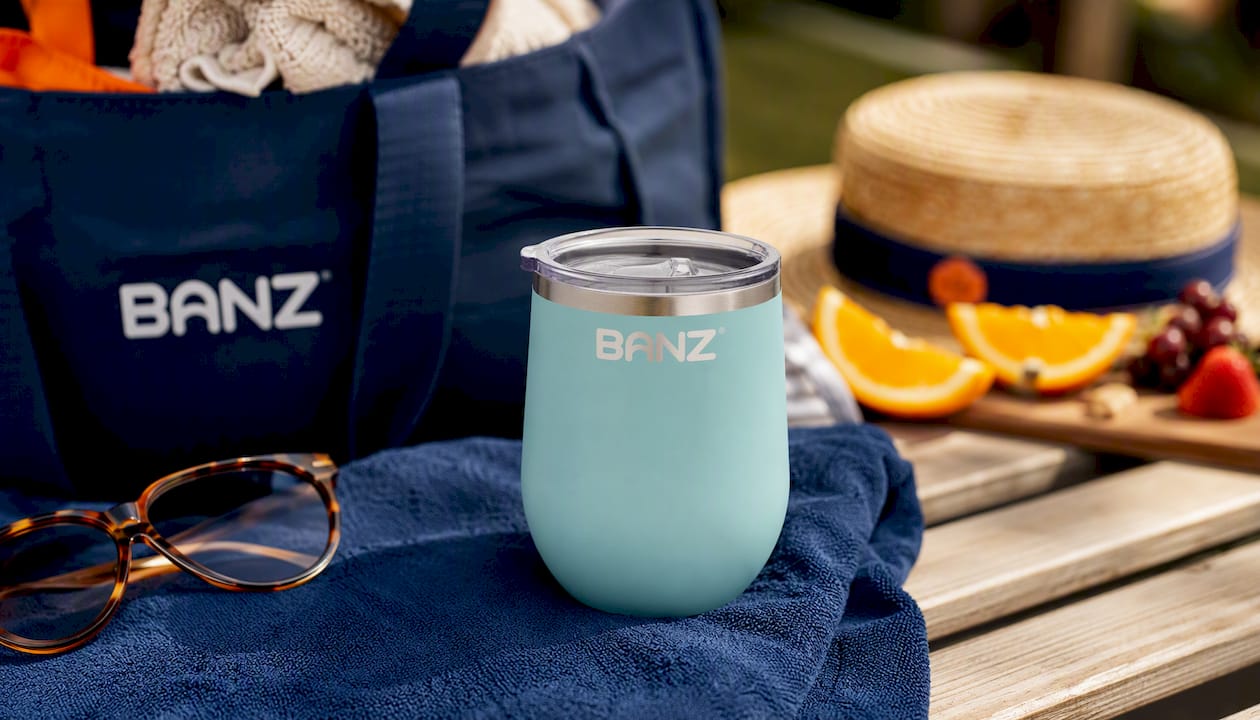
The Picnic Wine Insulated Stainless Tumbler 12oz is a straightforward example of what a stationary sipping tumbler should do well. It’s built from double-wall insulated stainless steel, sized at 12 ounces for a single serving, and shaped with a wide mouth that makes cleaning and ice access simple.
Here’s who it fits best:
- Parents who want one insulated cup for a glass of wine, iced tea, or sparkling water once the kids are settled
- Anyone hosting a picnic or backyard gathering who wants a drink to stay cold without a full-size bottle taking up space
- Caregivers who want an easy-clean, wide-mouth option for a quick drink at a desk or patio table
This tumbler fits a practical, family-first approach: simple, durable, and sized for real use rather than novelty.
Choose the Vessel That Matches Your Actual Day
Most guides treat this choice as a personality quiz: are you a “tumbler person” or a “bottle person”? That framing misses the point. The honest answer is that most parents need both, and the mistake is buying one oversized, do-everything vessel and expecting it to cover a school drop-off, a hike, and a quiet evening on the porch.
The conventional advice oversells capacity and undersells lid design. A 40-ounce bottle sounds impressive, but if the cap leaks in a bag or doesn’t fit your cupholder, it never leaves the cabinet. Prioritize lid security and mouth size for how you’ll actually drink, not the biggest number on the shelf.
If you take one thing from this guide, prioritize matching the vessel to the moment: a secure bottle for movement, a wide-mouth tumbler like the Picnic Wine Insulated Stainless Tumbler for sitting still. Get that right, and capacity and material become easy follow-up decisions instead of guesswork.
— Shari M. Murphy
Grab the Tumbler Built for Your Downtime
This tumbler offers a straightforward option for the moments a water bottle wasn’t built for: sitting down with a cold drink that stays cold. The Picnic Wine Insulated Stainless Tumbler 12oz is ideal if you want one reliable cup for wine, iced tea, or coffee once the kids are occupied, without hauling around a bulky bottle built for movement.
If your household also needs a rugged option for hikes, school runs, or sports practice, the 32oz stainless steel water bottle covers the active side of the equation. Add a spill-proof travel cup for car rides with younger kids, and check the product page now for current stock before deciding which size fits your routine.
Sources
- Water Bottles Buying Guide: How to Choose | REI Expert Advice
- Best water bottle (OutdoorGearLab)
- Water Bottle vs Tumbler: A Guide for Modern Travel – HYDAWAY Official Store