

Consumer noise-cancelling headphones are not a substitute for certified hearing protection. If your child is near hazardous noise — a concert, fireworks, a shooting range, or loud lawn equipment — use NRR-rated earmuffs or earplugs. Reserve ANC headphones for comfort in moderate, non-hazardous settings like airplane travel or background noise reduction.
- ANC is good for: Reducing steady, low-frequency background noise; lowering the urge to raise playback volume; travel comfort.
- ANC cannot reliably protect against: Impulse sounds (gunshots, fireworks), high-frequency noise, or any hazardous exposure above 85 dBA.
- For parents: Choose gear with a labeled NRR (Noise Reduction Rating) from NIOSH or OSHA-aligned standards whenever noise levels could be hazardous.
Key Takeaways
Certified NRR-rated hearing protection is the only reliable choice for hazardous noise; consumer ANC headphones do not meet that standard and should not be used as a substitute when noise levels are dangerous.
| Point | Details |
|---|---|
| ANC is not hearing protection | ANC reduces steady low-frequency noise by ~15–25 dB but carries no NRR and cannot block impulse sounds. |
| 85 dBA is the hazard threshold | Sounds above 85 dBA require NRR-rated gear; use certified earmuffs or earplugs at concerts, ranges, and loud events. |
| Fit determines real-world protection | Real-world attenuation is lower than the labeled NRR; a correct seal on a child-sized earmuff matters more than the highest number on the box. |
| Choose BANZ earmuffs for children | BANZ earmuffs carry NRR 26 dB, use a passive seal, and are sized specifically for infants and children. |
| Combine devices for extreme noise | At shooting ranges or very high-noise events, dual protection (plug + muff) adds roughly 5 dB over the higher-rated device alone. |
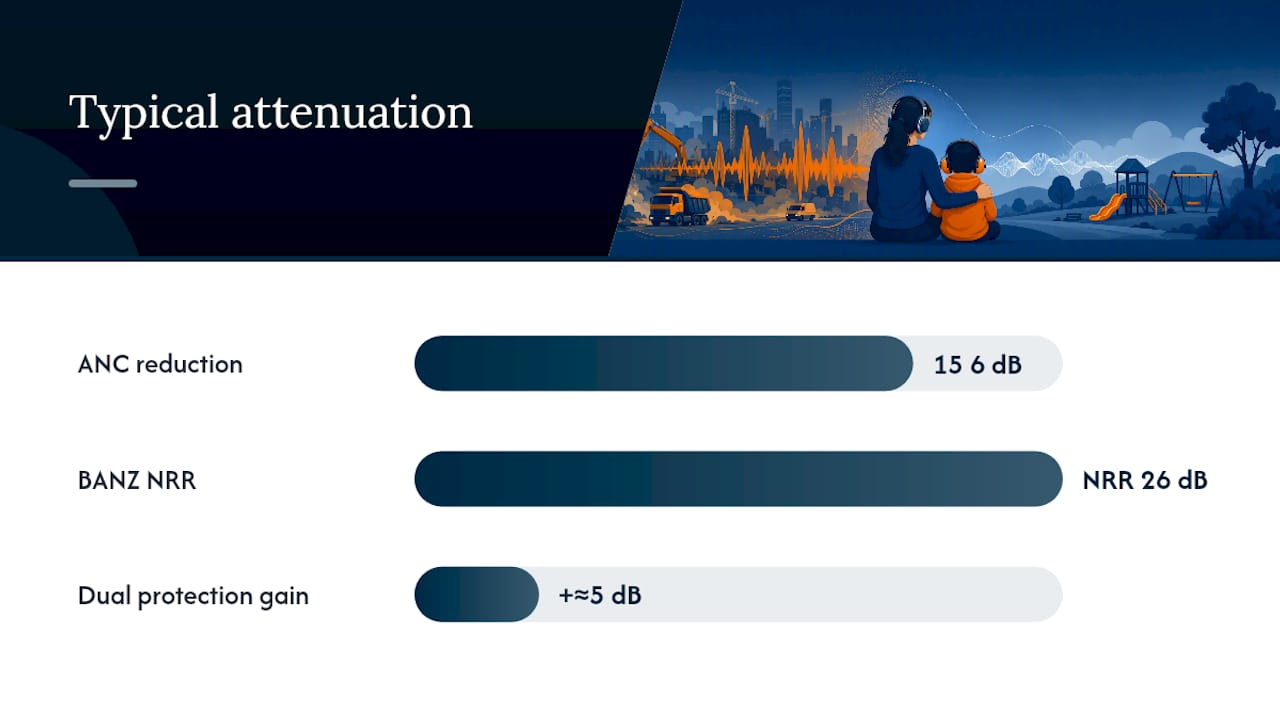
Table of Contents
- How noise cancelling vs hearing protection actually work
- What certified hearing protection is and how NRR ratings work
- ANC vs certified hearing protection: a side-by-side comparison
- Which device to use in common real-world scenarios
- How to pick, fit, and verify hearing protection for your child
- BANZ earmuffs: the recommended child hearing protection option
- The case for certified protection over ANC for kids
- BANZ hearing protection: shop certified earmuffs for children
- Sources
How noise cancelling vs hearing protection actually work
These two technologies solve different problems. Understanding the difference helps you pick the right tool for the situation.
Active noise cancellation (ANC)
ANC uses a microphone on the outside of the headphone to sample incoming sound. A processor generates an inverse waveform — a mirror-image signal — and plays it through the speaker a fraction of a second later. The two waves cancel each other out, reducing what you hear.
The catch: this process works best on predictable, steady, low-frequency sounds below roughly 1 kHz — engine hum, HVAC noise, airplane cabin drone. At higher frequencies, the processor cannot generate an accurate inverse wave fast enough. Sudden impulse sounds (a clap, a gunshot, a firecracker) arrive and end before the processor can respond at all.
- ANC typically reduces steady low-frequency noise by a moderate decibel range effective mainly at lower frequencies.
- Performance drops sharply above 1 kHz, where speech, alarms, and most hazardous industrial noise live.
- Battery failure or electronics malfunction can cause loss of noise reduction without warning.
Passive isolation
Passive isolation is simpler: a physical barrier (foam, silicone, or a sealed earcup) blocks sound by absorbing and reflecting it. No electronics, no battery, no signal processing. A well-fitted foam earplug or earmuff cushion attenuates sound across a broad frequency range, including the high frequencies and impulse events that ANC misses.
Pro Tip: If you rely on ANC headphones in a noisy environment and the battery dies, you lose whatever noise reduction you had. A passive earmuff or earplug keeps working regardless of power.
What certified hearing protection is and how NRR ratings work
Hearing protection devices (HPDs) are tested and rated specifically to reduce hazardous noise exposure. In the U.S., the key label metric is the Noise Reduction Rating (NRR), set by the EPA under 40 CFR Part 211.
How NRR is measured and used
NRR is measured in a lab under ideal fit conditions. Real-world attenuation is consistently lower. NIOSH recommends derating the labeled NRR to estimate actual field performance: divide the NRR by two as a practical estimate for earmuffs, or apply a 70% derate for foam plugs. A foam plug labeled NRR 33 dB delivers roughly 10–13 dB of real-world protection in average use.
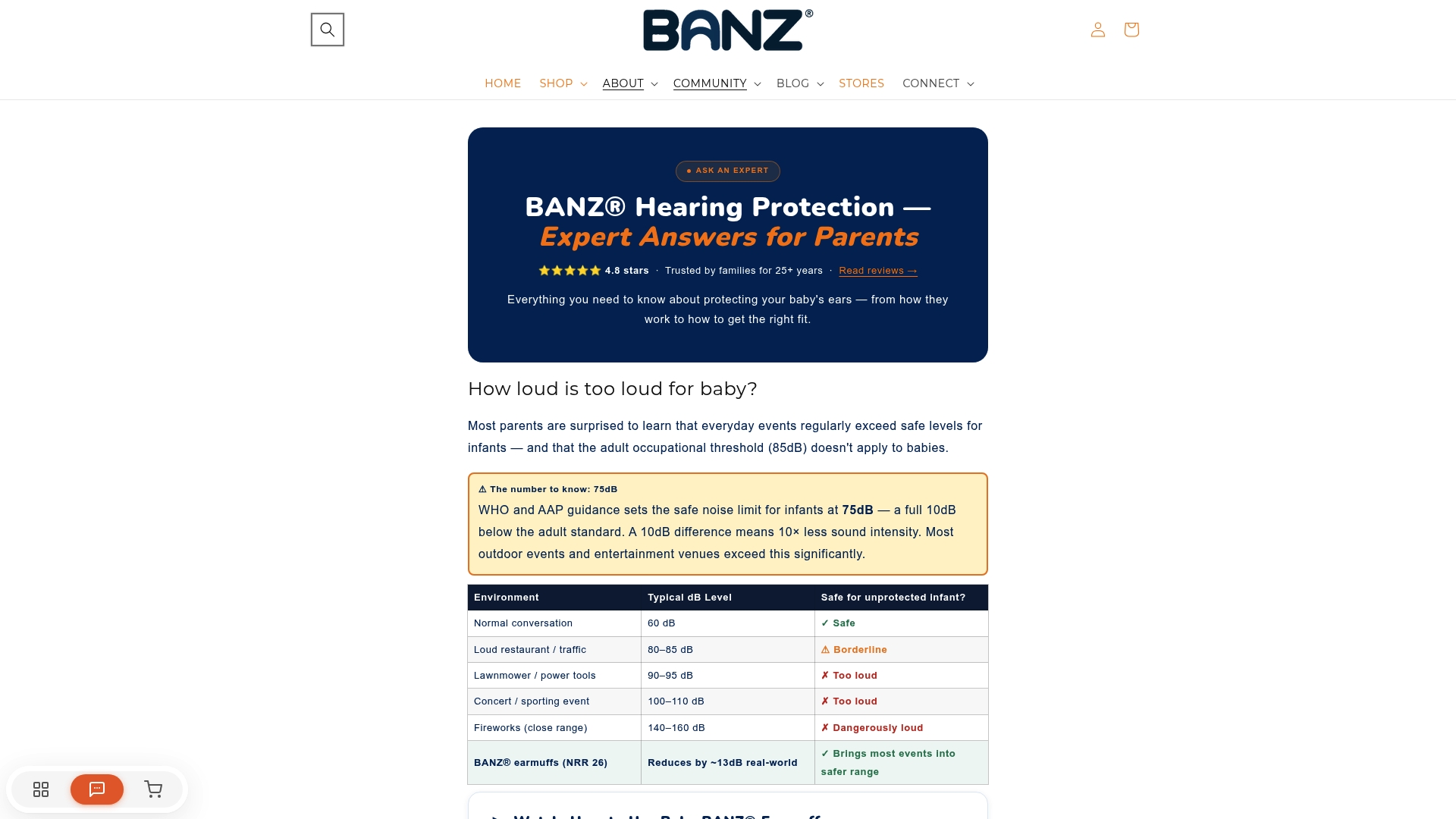
Sounds above 85 dBA are considered hazardous, and consistent use of NRR-rated gear is the primary tool for preventing noise-induced hearing loss when engineering controls are not available.
Device types and their trade-offs
- Foam earplugs: Lab NRR typically high; require correct roll-and-insert technique; variable real-world fit; not suitable for young children.
- Reusable earplugs: NRR typically moderate; easier to insert consistently; good for adults who wear protection regularly.
- Passive earmuffs: NRR typically moderate; easiest to fit correctly, especially on children; no insertion technique required; cushions must seal fully against the head.
- Electronic HPDs (level-dependent): Combine a passive seal with electronics that allow normal conversation while automatically compressing loud sounds. Carry an NRR. Suitable for ranges and worksites where situational awareness matters.
- Musician earplugs: Flat-attenuation plugs that reduce volume without distorting sound quality; NRR varies depending on filter; good for concerts.
- Dual protection (plug + muff): Used when single-device NRR is insufficient; combining devices can provide increased noise reduction beyond a single device alone. Recommended for shooting ranges and very high-noise environments.
OSHA’s noise standard requires hearing conservation programs when occupational exposures exceed action levels, and specifies that HPDs must be tested and rated — a bar that consumer ANC headphones do not meet.
ANC vs certified hearing protection: a side-by-side comparison
ANC headphones perform well in moderate, steady-noise environments. Certified HPDs are the right choice whenever noise is hazardous, unpredictable, or includes impulse events.
OSHA’s formal interpretation confirms that most consumer ANC headphones do not provide the passive seal or consistent attenuation required for occupational hearing protection. Some specialized devices combine a passive seal with active control and carry an NRR — those are a different category from standard consumer ANC headphones.
Key practical points:
- ANC creates a false sense of security at concerts and ranges because it reduces background hum while leaving impulse peaks largely unattenuated.
- For children, the gap between perceived quiet and actual protection is especially dangerous because kids cannot self-assess exposure risk.
- Electronic HPDs are the best of both worlds for adults at shooting ranges: full passive seal plus situational awareness.
Which device to use in common real-world scenarios
Decision rule: When noise can exceed 85 dBA or includes any impulse component, use NRR-rated gear. ANC alone is not enough.
-
Airplane / commute: ANC headphones are appropriate. Cabin noise is steady, low-frequency, and well below hazardous levels. ANC reduces the urge to raise playback volume, which protects hearing indirectly.
-
Concert or live music event: Use earplugs (NRR ≥ 15) or earmuffs. Musician earplugs preserve sound quality while cutting volume. For children at loud events, earmuffs with NRR ≥ 22 are the practical choice. See hearing protection options at venues for specific product guidance.
-
Fireworks: Use earmuffs or earplugs. Fireworks produce sharp impulse peaks that ANC cannot attenuate. For children, over-ear earmuffs are faster to put on and easier to keep in place than plugs.
-
Lawn equipment / power tools: Use earmuffs or earplugs rated NRR ≥ 25. Sustained exposure from mowers and leaf blowers regularly exceeds 85 dBA. ANC headphones worn while mowing provide inadequate protection and may mask warning sounds.
-
Shooting range: Use dual protection (earplugs + earmuffs) or electronic HPDs. Gunshot impulse peaks reach 140–165 dB SPL — far beyond what ANC can address. For children at noise-reduced shooting activities, certified protection remains necessary even in engineered low-noise environments.
-
Sporting events / stadiums: Crowd noise at major events can exceed 100 dBA. Use earmuffs for children. ANC headphones are not adequate for sustained stadium-level noise.
-
Office / study environment: ANC headphones are appropriate. Background office noise is typically 50–65 dBA, well below hazardous levels. ANC improves focus without any safety concern.
How to pick, fit, and verify hearing protection for your child
Correct fit matters more than the highest NRR number on the label. A well-fitted earmuff rated NRR 26 dB outperforms a poorly fitted plug rated NRR 33 dB every time.
Buying checklist
- NRR label present: No NRR label means no certified protection. Do not substitute.
- Child-specific sizing: Adult earmuffs do not seal correctly on small heads. Look for products sized for infants, toddlers, and children with adjustable headbands.
- Replaceable cushions: Cushions degrade over time and lose their seal. Replaceable cushions extend product life and maintain protection.
- No small parts: For young children, avoid products with detachable components that could become choking hazards.
- Secure headband: A headband that stays in place without constant adjustment is the single biggest factor in whether a child keeps the device on.
Fit verification
For earmuffs, press the cups firmly against the head and check that the cushion seals completely around the ear with no gaps at the hairline or glasses frames. A quick listening check: put the earmuffs on the child and speak at a normal conversational volume from one meter away. If the child can hear you clearly, the seal may be inadequate.
Personal Attenuation Rating (PAR) testing — where a device measures actual attenuation on a specific wearer — is the most accurate fit verification method and is available at some occupational health clinics and hearing centers. For most parents, the manual seal check and listening test are practical at-home alternatives.
Pro Tip: Children are more likely to keep earmuffs on when they choose the color or design. Letting a child pick their own pair from a range of child-sized options significantly reduces fiddling and removal. Check the best sensory earmuffs for kids if your child resists standard options.
Red flags
- Loose seal or visible gap between cushion and head
- Child repeatedly removing or adjusting the device
- Seller claims of “OSHA approved” or “100% OSHA compliant” — OSHA does not approve specific products; it sets performance standards. That phrasing is marketing language, not a certification.
- Modified or damaged cushions (cuts, compression, missing foam)
Maintenance
Clean earmuff cushions with a damp cloth after each use. Replace cushions when they show cracking, hardening, or loss of shape. Store earmuffs in a case away from heat and direct sunlight, which degrade foam and silicone faster.
BANZ earmuffs: the recommended child hearing protection option
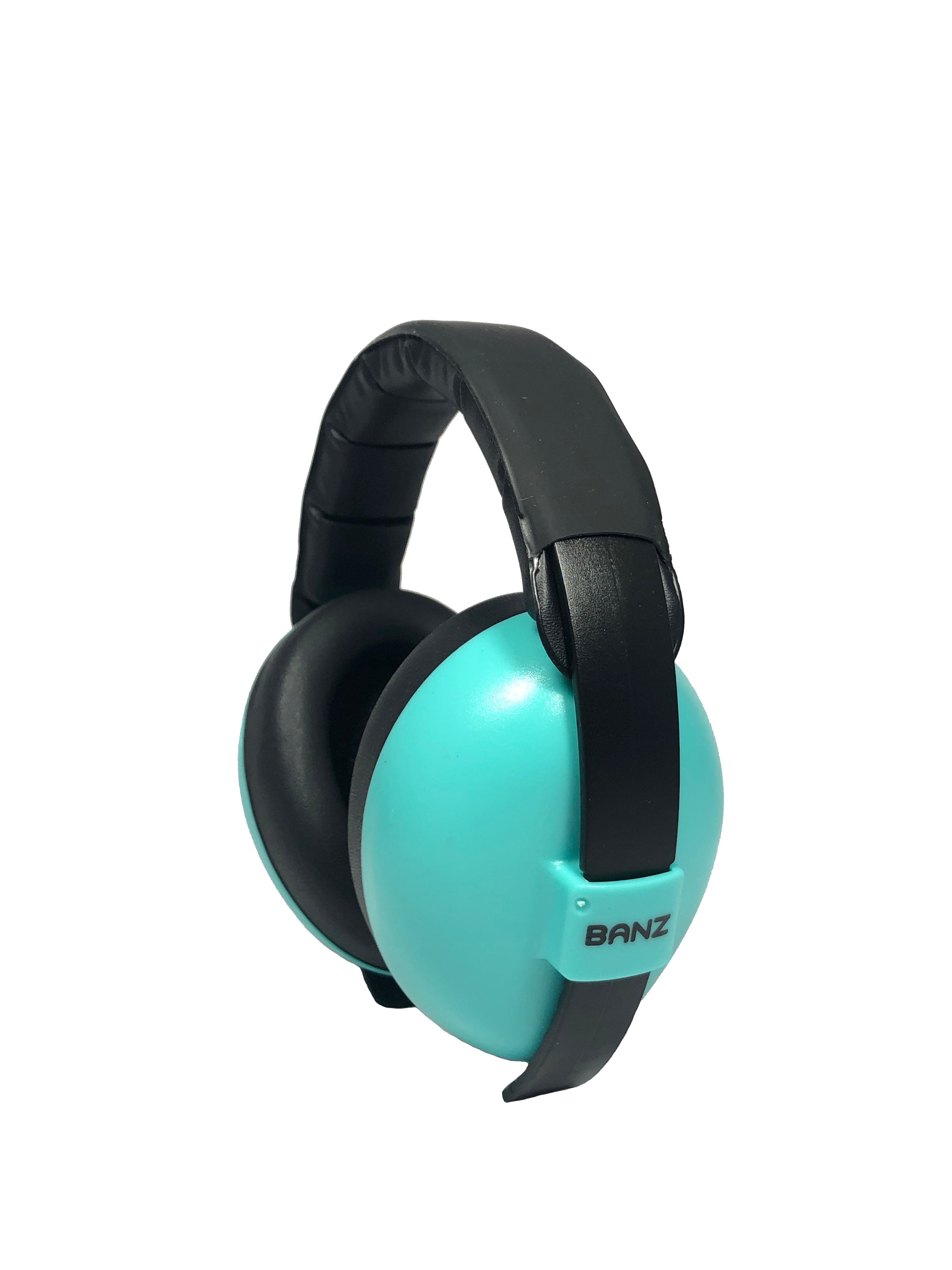
For parents looking for certified, comfortable hearing protection sized for children, BANZ earmuffs are the recommended choice. They carry an NRR of 26 dB, use a passive seal (no battery required), and are built specifically for infant and child head sizes with an adjustable headband and replaceable cushions.
Mapped against the comparison dimensions covered earlier:
- Protection level: NRR 26 dB passive seal; broad-spectrum attenuation including high frequencies and impulse events.
- Frequency performance: Passive barrier covers the full frequency range, including the high-frequency and impulse gaps that ANC leaves open.
- Child sizing and comfort: Designed for infants through school-age children; soft cushions and a secure headband reduce the chance of removal.
- Battery dependence: None. Protection is consistent regardless of charge level or electronics.
- Fit tips for kids: Position the cups so the cushion fully encircles each ear. Check for gaps at the hairline. Tighten the headband until snug but not uncomfortable. Recheck the seal after the child moves or turns their head.
BANZ also offers a full range of child safety gear beyond hearing protection. The Childrens Sun Hats with UPF 50+ Protection with Pocket and Children’s Toddler Reversible Sun Hats with UPF 50+ Protection pair well with earmuffs for outdoor events where both sun and noise are concerns. The Hello Sunshine Sunhat with Sequins is a popular option for families who want style alongside UPF 50+ coverage. Consistent, full-day protection for children covers both ears and skin.
For a deeper look at hearing protection styles for children, the BANZ resource library covers sizing, fit, and scenario-specific recommendations in detail.
The case for certified protection over ANC for kids
There is a version of this debate that sounds reasonable: ANC headphones are comfortable, kids accept them, and they do reduce some noise. Why not use what the child will actually wear?
The problem is that “some reduction” and “safe reduction” are not the same thing. ANC at its best delivers 15–25 dB of attenuation at low frequencies. A fireworks show or a stadium event can peak well above 100 dBA. Even with 25 dB of ANC reduction, a child’s ears are still exposed to levels that cause damage. Worse, the apparent quiet that ANC creates may lead a parent to leave the headphones on longer than they would otherwise, extending the exposure window.
Certified earmuffs with NRR 26 dB provide a passive, consistent, frequency-broad barrier. They work the same way whether the battery is full or dead, whether the noise is steady or sudden, and whether the child is sitting still or moving around. That reliability is what makes them the right tool for hazardous noise, not a marginal preference.
The practical trade-off is real: some children resist earmuffs. The answer to that is better fitting and child-specific design, not switching to a device that does not protect. Consistent wear is the single most important factor in whether hearing protection actually works.
BANZ hearing protection: shop certified earmuffs for children
BANZ earmuffs give parents a certified, child-sized option with NRR 26 dB passive protection — no batteries, no guesswork about whether the electronics are working.
The earmuffs are sized for infants through older children, with soft replaceable cushions and an adjustable headband that stays in place during active use. They are available now at Usa. Check the current product page for available sizes and colors before adding to cart. For parents who also need sun protection, the kids sun safety resource library covers UV gear alongside hearing safety in one place.
Sources
- Provide Hearing Protection | Noise and Hearing Loss | CDC
- Osha
- The use of noise-canceling headphones in place of intra-aural earplugs | Occupational Safety and Health Administration
- NIDCD — Hearing protectors
This article is general information, not a substitute for advice from a qualified doctor. Consult a qualified healthcare professional about your own circumstances before acting on anything here.
Recommended
- Hearing Protection Styles for Children: 2026 Parent Guide – BANZ® Carewear USA
- Outer Ear Noise Protection for Kids at Loud Events – BANZ® Carewear USA
- Noise Safety for Children: Everyday Sounds Parents Should Watch |BANZ® – BANZ® Carewear USA
- How Earmuffs Reduce Sound Explained for Parents – BANZ® Carewear USA
