

Earmuff provision at family events is defined as the deliberate supply and use of hearing protection devices to shield children’s developing ears from noise levels that exceed safe thresholds. Sustained noise above 80 dB poses a real risk to children’s hearing, and common family gatherings routinely hit that mark. Fireworks, sports games, concerts, and parades are not just loud. They are loud enough to cause permanent damage to ears that are still maturing. This guide covers the role of earmuff provision at family events, how to choose the right pair, and how to get your child to actually keep them on.
What noise levels at family events require ear protection for kids?
Noise is measured in decibels (dB), and the scale is not linear. Every 10 dB increase represents roughly ten times more sound energy. That matters because fireworks can reach 110–150 dB, while normal conversation sits at just 60 dB. The gap between a backyard chat and a Fourth of July fireworks show is not a minor step up. It is an enormous leap in acoustic force.
Children’s ears are more vulnerable than adult ears because the auditory system continues developing through early childhood. Noise damage is cumulative and irreversible. A single loud event can cause permanent threshold shifts in hearing, especially in infants and toddlers who cannot communicate discomfort.
The table below shows typical noise levels at common family events alongside the risk they carry for children.
| Event | Typical Noise Level | Risk Level for Children |
|---|---|---|
| Fireworks show | 110–150 dB | Severe. Immediate protection required. |
| Rock concert or live music | 110–130 dB | Severe. Earmuffs mandatory. |
| Sports stadium | 90–110 dB | High. Protection strongly recommended. |
| County fair or carnival | 85–95 dB | Moderate to high. Protection advised. |
| Parade with marching band | 85–100 dB | High. Protection recommended. |
| Wedding reception with DJ | 85–95 dB | Moderate. Protection advised for infants. |
Any event above 80 dB sustained exposure warrants hearing protection for children. The importance of earmuffs at family gatherings becomes clear when you see how many routine outings exceed that threshold.
How to choose the best earmuffs for family events
The Noise Reduction Rating (NRR) is the standard measure of how much sound an earmuff blocks. A higher NRR means more protection. Recommended NRR levels vary by event type: 22–25 dB for fairs and carnivals, 22–27 dB for stadiums, and 27–31 dB for very loud events like fireworks or concerts. Matching the NRR to the event is the first step in choosing correctly.
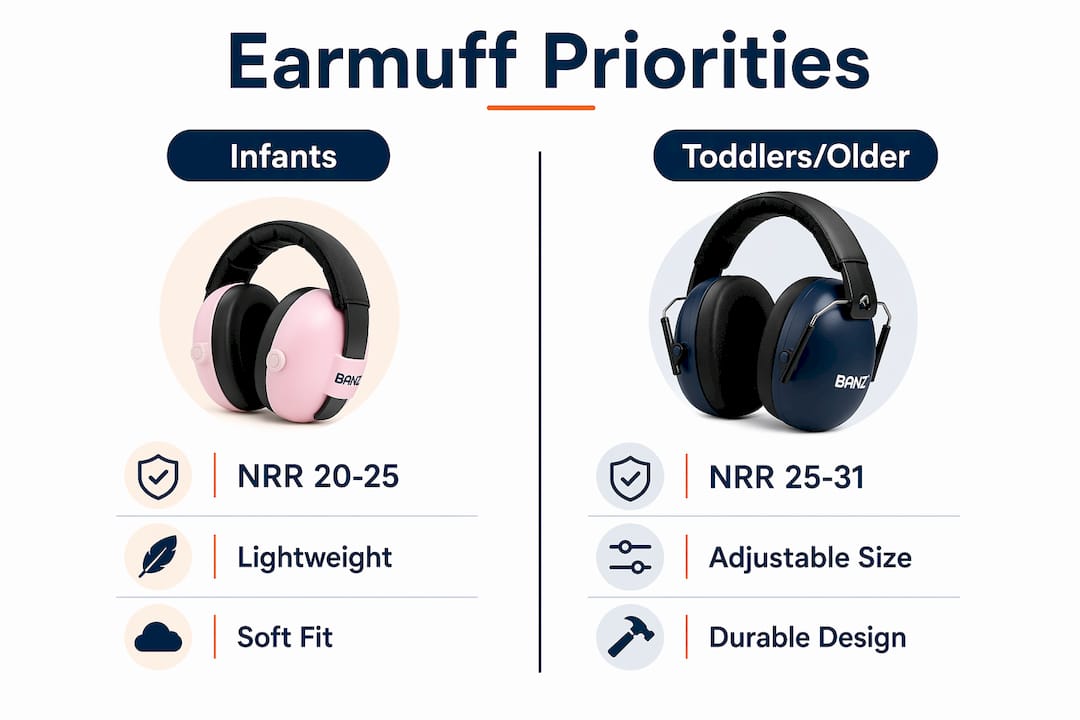
For infants, experts recommend lightweight models at 20–25 dB NRR to maximize comfort without sacrificing protection. A newborn’s head is small and sensitive. Heavy or rigid earmuffs will be rejected quickly, defeating the purpose entirely.
Key features to evaluate before you buy
When selecting earmuffs for children attending family events, check these factors:
- NRR rating. Match it to the loudest event you plan to attend. A 25 dB NRR pair works for most fairs and sports games. Go to 27–31 dB for fireworks or concerts.
- Clamp force. Excessive clamp force causes discomfort and leads children to pull earmuffs off. Look for adjustable headbands with gentle but secure tension.
- Ear cup padding. Soft foam or gel pads reduce pressure on small ears. This is especially critical for infants and toddlers.
- Adjustability. Headbands that extend and contract let the earmuffs grow with your child across multiple events and years.
- Design appeal. Bright colors and fun patterns increase the chance a child will accept and wear the earmuffs without resistance.
Ear defenders designed for children use lightweight materials and correct sizing to reduce hearing damage effectively. Adult earmuffs placed on a child’s head do not seal properly and provide far less protection than the NRR label suggests.
The table below compares earmuff feature priorities by child age group.
| Age Group | NRR Priority | Key Comfort Feature | Design Consideration |
|---|---|---|---|
| Newborn (0–3 months) | 20–25 dB | Ultra-soft pads, minimal clamp | Neutral colors, minimal weight |
| Infant (3–18 months) | 22–25 dB | Soft foam cups, flexible band | Bright colors to engage attention |
| Toddler (18 months–3 years) | 22–27 dB | Adjustable band, padded cups | Fun patterns or characters |
| Child (3–8 years) | 25–31 dB | Adjustable, durable build | Child’s choice of color or style |
Pro Tip: Let your child pick the color or pattern of their earmuffs before the event. Children who choose their own gear are significantly more likely to wear it without a fight.
Best practices for introducing earmuffs to children at noisy events
Getting a child to wear earmuffs at a loud event is easier when the earmuffs are not a surprise. Introducing earmuffs before noisy events and allowing recovery breaks greatly increases both effectiveness and child compliance. The strategy is simple: make the earmuffs familiar before the noise starts.
Follow these steps to build acceptance and protect hearing effectively:
- Introduce earmuffs at home first. Put them on during a quiet activity like watching a movie or playing with toys. The goal is to make wearing them feel normal, not alarming.
- Practice short wear sessions. Start with five minutes and gradually extend. Children with sensory sensitivities especially benefit from this gradual approach.
- Check the fit before you leave. The ear cups should fully cover the ears with no gaps. The headband should sit centered on the top of the head without tilting.
- Recheck fit during the event. Children move constantly. Earmuffs shift. A quick adjustment every 30–45 minutes keeps the seal intact.
- Take scheduled breaks. Auditory experts recommend 15–20 minute breaks during long loud events for ear recovery. Move to a quieter area, remove the earmuffs, and let ears rest before returning.
- Watch for red marks or distress. Red marks behind the ears signal that the clamp is too tight. Loosen the headband or take a longer break immediately.
Pro Tip: Never over-tighten earmuffs to compensate for a poor fit. A proper seal comes from correct sizing, not pressure. If the cups do not seal with gentle tension, the earmuffs are the wrong size.
How earmuffs support children with sensory sensitivities at family gatherings
Earmuffs do more than block decibels for children with sensory processing differences. They act as a sensory shield that reduces chaotic noise input during busy family settings. For neurodivergent children, the unpredictable sound environment at a wedding reception or a crowded fair can trigger genuine distress. Earmuffs lower the overall sensory load and make participation possible.
Parents report that children prone to noise-induced meltdowns stay calmer and engage longer when wearing well-fitted earmuffs. The reduction in background noise does not eliminate the event experience. It filters out the overwhelming parts while allowing the child to remain present.
Here is how to pair earmuffs with broader sensory support strategies at family events:
- Choose seating away from speakers and percussion sections. Distance reduces the base noise level before earmuffs even factor in.
- Bring a familiar comfort item. A favorite toy or blanket alongside earmuffs gives the child two layers of sensory grounding.
- Use visual schedules. Show the child a simple picture sequence of the event before attending. Predictability reduces anxiety and makes the earmuffs feel like part of a known plan.
- Pair with noise-canceling or sensory-friendly earmuffs. Products designed for sensory-sensitive children use softer materials and lower clamp force to avoid adding tactile discomfort on top of auditory stress.
The goal is not to isolate the child from the event. The goal is to make the event manageable.
Earmuff use across different types of family events and outdoor activities
Ear protection needs vary by event. A county fair and a fireworks show require different NRR levels and different strategies. Knowing what to bring before you arrive makes the difference between a successful outing and an early exit.
Fireworks shows and air shows. These are the loudest common family events. Use earmuffs rated at 27–31 dB NRR. For children sitting very close to launch sites or aircraft, earplugs can be doubled under earmuffs to increase total protection. This combination is also recommended near motorsports events.
Sports stadiums. Crowd noise and PA systems regularly push past 100 dB during peak moments. A 22–27 dB NRR pair handles most stadium environments. Sit away from the PA speakers when possible. Upper-level seating often reduces noise exposure compared to field-level seats.
Parades and marching band events. Brass and percussion instruments at close range hit 85–100 dB. Position your family on the outer edge of the crowd rather than the front row. Use earmuffs rated at 22–25 dB NRR minimum.
Weddings and receptions. Parents use earmuffs at family weddings to protect newborn and toddler ears from DJ systems and live bands. A 22–25 dB NRR pair is sufficient for most reception environments. Identify a quiet room in the venue for breaks.
Fairs and carnivals. Ride machinery, crowd noise, and amplified music combine to push ambient levels above 85 dB. Bring earmuffs rated at 22–25 dB NRR and use them consistently, not just near the loudest attractions.
Consistent use across all these settings is the single most effective hearing protection strategy. Positive reinforcement works well. Praise the child for wearing the earmuffs, and make the gear part of the pre-event routine alongside sunscreen and snacks.
Key takeaways
Effective hearing protection at family events requires matching the earmuff’s NRR to the event’s noise level while prioritizing a comfortable, child-appropriate fit above all else.
| Point | Details |
|---|---|
| Match NRR to the event | Use 22–25 dB for fairs, 27–31 dB for fireworks and concerts. |
| Comfort drives compliance | Excessive clamp force causes children to remove earmuffs; prioritize soft pads and gentle tension. |
| Introduce earmuffs early | Practice at home before the event to build familiarity and reduce resistance. |
| Take recovery breaks | Schedule 15–20 minute quiet breaks during long loud events to allow ear recovery. |
| Support sensory needs | Pair earmuffs with seating strategy, comfort items, and visual schedules for sensory-sensitive children. |
Why I think most parents underestimate this until it’s too late
I have watched parents at fireworks shows hold their hands over their babies’ ears while their toddlers sit completely unprotected two feet away. The instinct is there. The follow-through is not. The honest truth is that hearing loss from noise exposure does not announce itself. There is no immediate pain signal the way there is with a burn or a cut. Damage accumulates silently, and by the time a child shows signs of hearing difficulty, the window for prevention has already closed.
The mistake I see most often is treating earmuffs as optional gear for extreme situations only. A stadium game is not extreme. A wedding with a DJ is not extreme. Both regularly exceed the 80 dB threshold that puts children’s hearing at risk. The second most common mistake is buying the right earmuffs and then letting them sit in the bag because the child refused to wear them once. That refusal is almost always a fit or familiarity problem, not a permanent rejection. Fix the fit. Practice at home. Try a different color. The child will come around.
Long-term hearing health starts with decisions made at ordinary family events, not just the obviously loud ones. The noise safety resources available to parents today make it genuinely straightforward to get this right. There is no reason to wait for a hearing test to confirm what prevention could have avoided entirely.
— Shari M. Murphy
BANZ earmuffs for family events: find the right fit
BANZ designs hearing protection specifically for children, from newborns through school age. Every product in the BANZ lineup addresses the core challenge of ear protection at family events: high enough NRR to block damaging noise, light enough construction for small heads, and comfortable enough padding to keep kids wearing them through the whole event.
The baby earmuffs range covers infants from birth, with soft foam cups and gentle clamp force designed for sensitive skin. For toddlers and older children, the printed earmuff collection adds bright patterns that children actually want to wear. BANZ has protected over 2 million families across six continents. Browse the full selection and match the right pair to your next family outing.
FAQ
What is the safe noise level for children at events?
Sustained noise above 80 dB poses a risk to children’s hearing. Any family event that regularly exceeds this level requires hearing protection.
What NRR do children’s earmuffs need for fireworks?
Earmuffs rated at 27–31 dB NRR are recommended for fireworks shows and other very loud events. For children seated very close to launch sites, adding earplugs under the earmuffs increases total protection.
How do I get my child to keep earmuffs on?
Comfort is the primary factor that determines whether children keep earmuffs on. Introduce them at home before the event, let the child choose the color or design, and check that the clamp force is gentle rather than tight.
Can newborns wear earmuffs at family events?
Yes. Newborns can and should wear earmuffs at loud events. Choose lightweight models with an NRR of 20–25 dB and ultra-soft ear cup padding. Check for red marks behind the ears as a sign that the fit needs adjustment.
Should I use earplugs and earmuffs together for very loud events?
Earplugs can be doubled under earmuffs at extremely loud events such as fireworks shows, motorsports, and air shows to increase total hearing protection. This combination is recommended when children are in close proximity to the noise source.
