

TL;DR:
- Teaching children UV awareness helps develop lasting sun-safe habits and reduces lifetime skin cancer risk.
- Early education and interactive activities improve knowledge and promote independent protective behaviors among kids.
Teaching children UV awareness reduces lifetime skin cancer risk, builds lasting sun-safe habits, and gives kids the tools to protect themselves outdoors. The benefits of teaching UV awareness to kids go well beyond avoiding a single sunburn. Here is what the evidence supports:
- Childhood sunburns increase melanoma risk later in life, making early education a direct prevention strategy
- Kids who understand the UV Index check conditions before going outside, not after
- Sun safety framed as a life skill produces independent behavior, not just rule-following
- WHO and CDC both recommend protective action when the UV Index reaches 3 or above
- Early education lowers long-term healthcare costs by reducing UV-related disease
Why childhood UV exposure puts kids at higher health risk
Children’s skin is more sensitive to UV radiation than adult skin, and the damage accumulates silently. Sunburns during childhood and adolescence directly increase the risk of melanoma in later life. A larger amount of UV radiation can also reach and damage a child’s retina compared to an adult’s, adding eye health to the list of concerns.
The WHO projects that a 10% reduction in ozone levels could increase global melanoma cases by 4,500 annually. Children growing up today face that compounding risk across their entire lifetime.
Johns Hopkins Medicine notes that no safe level of UV exposure exists. Tanning is skin damage, not a health signal. Teaching kids that fact early removes a major misconception before it takes hold.
A review of 66 sun safety intervention studies found that 48 produced positive behavioral changes, including increased sunscreen use, hat wearing, and shade-seeking. The evidence is clear: education works, especially when it starts young.
Curricula and activities that actually teach UV awareness
Age-appropriate structure matters. Young children respond to simple rules and visual cues. Older students can handle UV Index data, skin type science, and critical thinking about tanning culture.
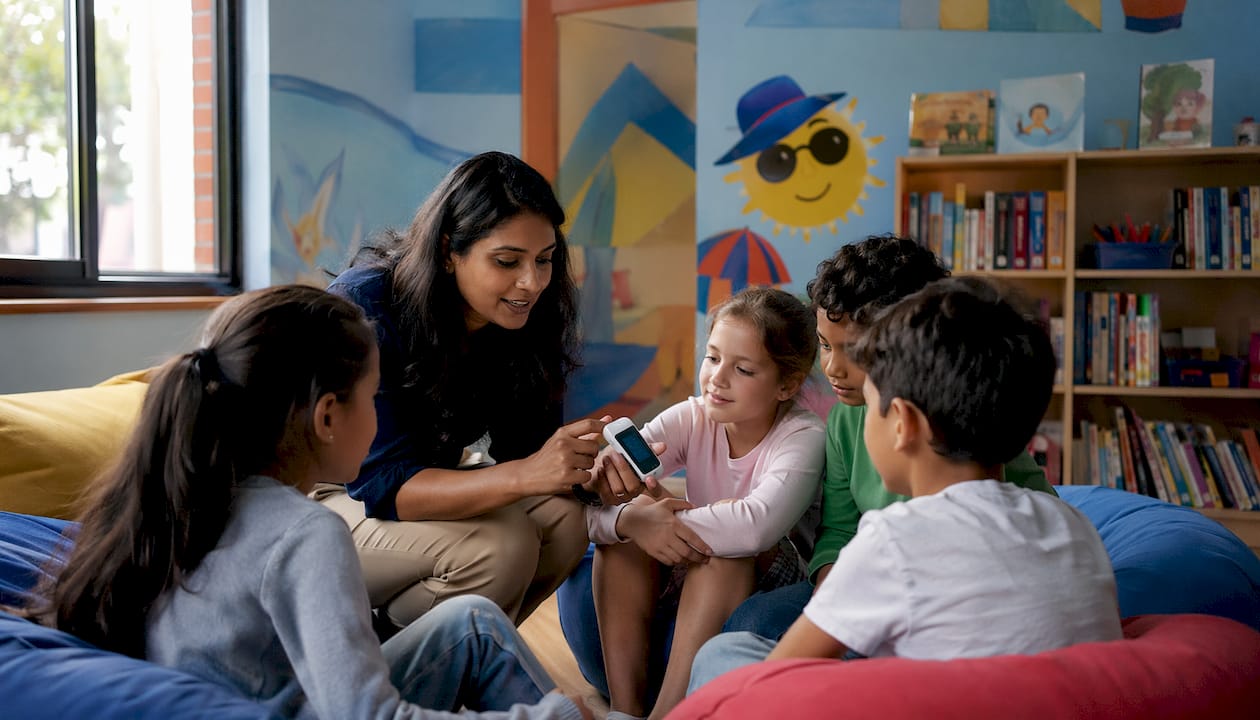
SunAWARE is one widely used framework that stages learning by developmental level. The EPA’s SunWise School Program, designed for grades K–8, integrates sun safety into science, health, social studies, and math. An evaluation of SunWise across many schools found significant knowledge gains and increased intentions to play in the shade after the program.
Effective classroom activities include:
- Handheld UV dosimeter exercises where students measure UV at different school locations
- Shade mapping projects that identify safe outdoor zones on school grounds
- Sunscreen SPF comparison tests using UV-sensitive beads
- UV Index tracking as a daily classroom routine
- Interactive slideshows with question prompts rather than passive lectures
- STEM lab safety glasses for hands-on UV measurement activities
Pro Tip: Embedding UV awareness into existing subjects like science and physical education removes the need for standalone lessons, which reduces teacher workload and increases the chance the content actually gets taught.
| Teaching Method | Best Age Group | Key Benefit |
|---|---|---|
| UV dosimeter outdoor activity | Ages 8–12 | Hands-on data collection improves retention |
| SunWise cross-curricular lessons | Grades K–8 | Integrates into standard curriculum |
| Daily UV Index announcements | All ages | Builds routine checking behavior |
| Shade mapping projects | Ages 6–10 | Connects environment to personal safety |
Framing sun protection as a skill children own, rather than a rule adults enforce, produces better compliance. Children with agency pack their own sunscreen and choose hats independently. That shift from passive to active is the psychological payoff of good UV education.
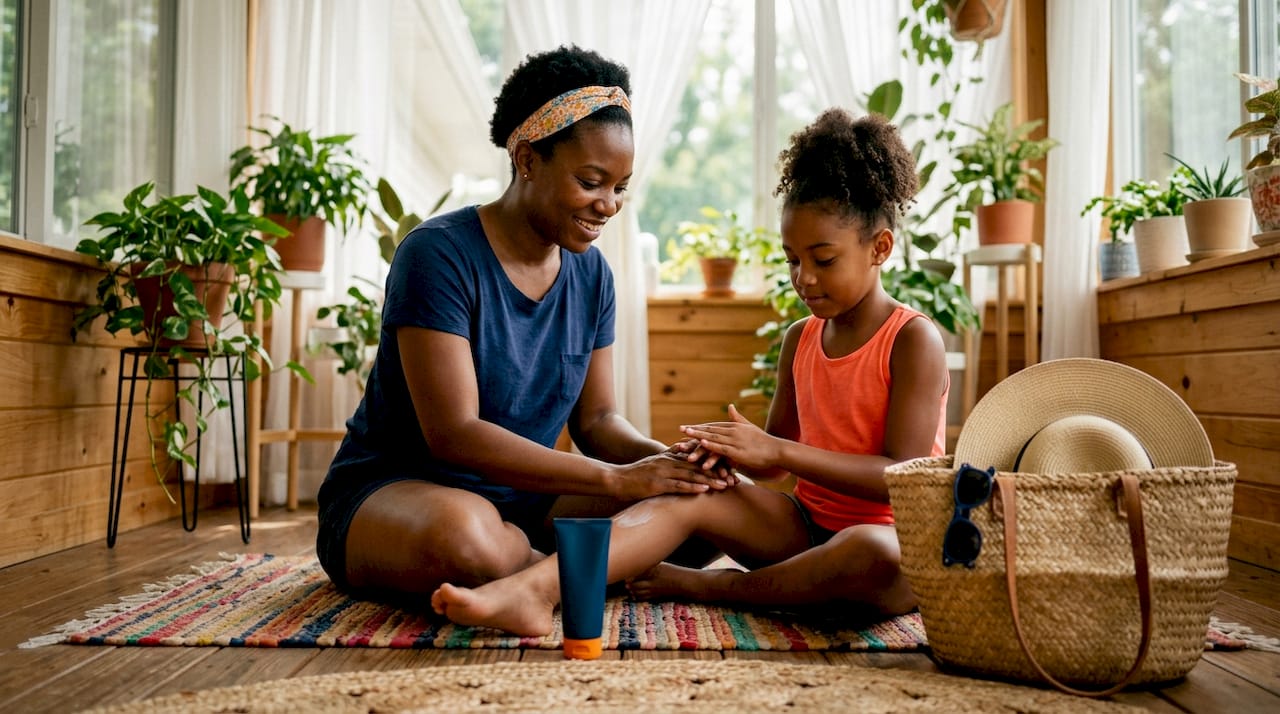
How the UV Index guides daily sun protection decisions
The UV Index is a numbered scale that tells you how quickly unprotected skin can be damaged on a given day. The WHO and CDC both set the action threshold at a UV Index of 3. At that level or above, sun protection measures should be in place before kids go outside.
| UV Index Level | Risk Level | Recommended Action |
|---|---|---|
| 1–2 | Low | No protection needed for most |
| 3–5 | Moderate | Sunscreen, hat, and shade during peak hours |
| 6–7 | High | Protective clothing, limit midday exposure |
| 8–10 | Very High | Minimize outdoor time 10 AM–4 PM |
| Older students | Extreme | Avoid unprotected outdoor exposure |
UV rays are strongest between 10 AM and 4 PM. Scheduling outdoor recess before 10 AM or after 4 PM is one of the simplest structural changes a school can make.
Pro Tip: Add a UV Index check to your morning classroom routine the same way you check the weather. The free BANZ Protect app provides real-time UV readings, making it easy for parents and teachers to build this habit daily.
What research shows about interactive UV education
The strongest evidence for UV education comes from studies that use hands-on methods rather than passive instruction. In a study of Australian primary school students, a 60–90 minute interactive session using handheld UV dosimeters raised average knowledge scores from 6.3 to 8.9 out of 10 after a single session, with results consistent across different schools, grades, and genders.
IoT-based UV sensors and dosimeters turn an invisible hazard into concrete, personal data. When students can see UV levels change as they move from sun to shade, the concept stops being abstract. Real-time UV data tools bridge that gap between classroom knowledge and outdoor behavior. Well-structured school sun safety programs that embed UV awareness into daily routines outperform isolated one-off lessons on every behavioral measure.
How parents and communities reinforce what schools teach
School programs work best when families and communities back them up. Children who see adults consistently applying sunscreen, wearing hats, and checking the UV Index before outdoor activities are far more likely to adopt those behaviors themselves. Role modeling is not supplementary. It is the mechanism through which classroom knowledge becomes daily habit.
The CDC recommends that teachers and school administrators actively promote sun-safe behaviors by scheduling outdoor activities outside peak UV hours and providing breaks for sunscreen reapplication. Parents can extend that structure at home by keeping sunscreen accessible, building UV checks into weekend routines, and using tools like the BANZ Protect app for real-time monitoring. Community-level consistency, across schools, sports programs, and families, produces the multi-layered reinforcement children need for lasting behavior change.
Tailoring UV awareness for diverse child populations
UV risk is not uniform across all children, and effective education accounts for that. Children with lighter skin tones, fair or red hair, and blue eyes face a higher risk of UV damage and skin cancer than children with naturally darker skin. That said, excessive UV exposure carries risks for all skin types, including eye damage and heat-related illness.
Culturally responsive UV education avoids the assumption that sun safety is only relevant to fair-skinned children. Programs should address the full spectrum of risk, explain that UV harms eyes and immune function regardless of skin tone, and use examples and imagery that reflect the diversity of the children in the room. For families from cultures where outdoor sun exposure carries social or practical significance, framing sun protection as compatible with outdoor activity, not opposed to it, improves acceptance and follow-through. The BANZ kids sun safety resource library includes materials from the CDC, WHO, and EPA that educators can adapt for diverse classroom settings.
Key Takeaways
Teaching UV awareness to children from an early age directly reduces skin cancer risk and builds sun-safe habits that last a lifetime.
| Point | Details |
|---|---|
| Start education early | Childhood sunburns increase lifetime melanoma risk; early intervention produces the strongest behavioral change. |
| Use interactive methods | A 60–90 minute dosimeter session raised student knowledge scores from 6.3 to 8.9 out of 10. |
| Apply the UV Index threshold | WHO and CDC recommend protective action at a UV Index of 3 or above, especially during 10 AM–4 PM. |
| Embed into daily routines | UV Index checks and sun safety announcements integrated into school schedules outperform standalone lessons. |
| Model the behavior | Consistent adult role modeling at home and school converts classroom knowledge into lasting daily habits. |
BANZ has protected children from UV and noise hazards across many families on multiple continents. From UPF 50+ sun gear to the free BANZ Protect app with real-time UV monitoring, BANZ gives parents and educators the tools to act on everything covered here. Explore UV safety resources for kids and find the right protection for your child today.
1 comment
A thoughtful and heartfelt piece that beautifully highlights family, legacy, and the importance of sharing meaningful lessons with future generations.